Top Ad 728x90

More Stories

Thursday, 27 August 2026

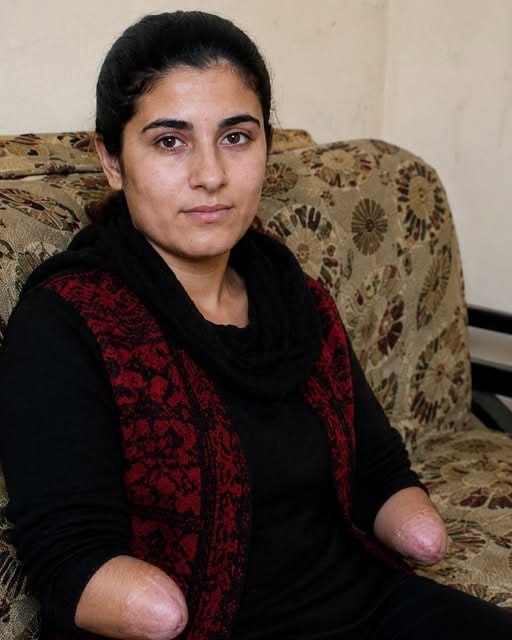
At 21, my husband took me to a field and cut off both my hands… But what happened next made an entire country remember my

by

At 21, my husband took me to a field and cut off both my hands… But what happened next made an entire country remember my name.
I was twenty-one when I learned that the man who sleeps next to you can be more dangerous than any stranger.

My
name was Ayşe, and I had only been married for eight months. In our village, they still called me “the newlywed.” I was still learning to live in my husband’s house, to speak in hushed tones, to wake up before dawn, and to hide my fear before it appeared on my face.

My husband, Mehmet Ali, was not a kind man. At first, I didn’t call it cruelty. I called it a bad temper. I called it marriage, because that’s what many women around me had learned to call it.

If the food was late, I blamed myself. If his voice turned cold, I spoke even less. If he looked at me as if I belonged to him, I told myself that perhaps all husbands were like that when no one was watching.

Then came the wedding of the daughter of some neighbors.

In our village, weddings were a celebration
for everyone. The women brought food, blankets, flowers, and fabrics to decorate the bride’s room. Even poor families wanted their daughters to begin married life surrounded by color and hope.

That morning, my mother-in-law opened a trunk and handed me two pieces of fabric.

“Take this to the bride’s house,” he told me. “They can use it for decoration.”

I didn’t steal them. I didn’t hide them. I took them with her permission, thinking only that I was helping another young woman prepare for the happiest day of her life.

At the bride’s house, the women laughed, arranged pillows, hung fabrics on the walls, and teased the nervous bride affectionately. For a while, I forgot the heaviness of my own home. I laughed with them and felt like I belonged somewhere.

In the afternoon, Mehmet Ali found out about the fabrics.

When he got home, he didn’t scream. That scared me even more. He stood in the doorway and stared at me with a silence that chilled my hands.

Anatomy
—Where are the fabrics? —he asked.

“Your mother gave them to me,” I replied. “For the bride’s room.”

Her face changed.

—My mother doesn’t decide what comes out of my house.

My mother-in-law tried to intervene.

—I told him to take them.

He looked at her only once, and she remained silent.

That’s when I realized it had nothing to do with the fabrics. He was furious because I had done something without fearing him first.

A few minutes later, he ordered me to go with him.

“Where to?” I asked.

—To the countryside.

I wanted to refuse. I wanted to run back to the wedding house, where there were women, voices, and witnesses. But I was a young wife in a town where women were taught that disobeying their husbands could bring more shame than suffering because of it.

Real Estate Market
So I followed him.

The path seemed endless. Behind us, I could still hear the distant laughter from the wedding. With each step, those voices grew fainter, until only the wind, the dust, and the man walking beside me remained.

Then I saw what he was carrying.

A sharp farming tool.

My body understood before my mind could accept it. I told myself he just wanted to scare me. I repeated to myself that no man would actually destroy his wife over two pieces of cloth.

I was wrong.

When we arrived at the empty field, there was no one around. No woman. No neighbor. No one who could stand between his anger and me.

He turned to me and asked:

—Which hand did you use to hold the fabrics?

Anatomy
My mouth went dry.

—With the right hand—I whispered.

The way he looked at my hand revealed everything. He hadn’t brought me there to interrogate me. He had brought me there to punish me.

What happened next divided my life into two parts: the young woman who walked into that field and the woman who left there carried by other people.

I won’t describe every detail. Some cruelties are terrible enough without needing to be covered in blood. I remember falling. I remember the dirt against my dress. I remember looking at my husband, waiting to see remorse appear on his face.

He didn’t appear.

And in the midst of that commotion, I raised my other hand toward him and uttered the words that people would repeat for years:

—If you’re going to leave me like this, take this one too. What am I going to do in this world with only one hand?

Anatomy
For a second, I thought it would stop.

He didn’t.
When they found me, I was barely alive. The women screamed. Someone ran for help. Someone kept repeating my name over and over, as if they could keep me in this world by calling me back.

At the hospital they told me I had survived.

But when I opened my eyes and realized what had been taken from me, it didn’t feel like a miracle. My hands were gone. My marriage was over. The silent bride everyone had expected me to be had died in that field.

Anatomy.
But not me.

Mehmet Ali believed he had ended my life that day.

But what if the most terrifying thing for a cruel man is not the woman he destroys… but the woman who refuses to remain destroyed?

I’ve left the rest of the story in the first comment because Facebook won’t let me post it all here. What Ayşe did after waking up without her hands made an entire country speak her name with respect. That’s why I’ll leave the continuation in the comments 👉👉‼️‼️⬇️⬇️

If the link doesn’t appear, change your comment settings from “Most relevant” to “All comments”. 👇👇

PART 2
At first, I thought that surviving had been the hardest part.

But I was wrong.

The hardest part began after the hospital, when people looked at me with pity and whispered the same question everywhere I went:

—How will he live now?

My husband was arrested. The court punished him. People said that justice had been served.

Calculators and reference tools.
But justice didn’t help me get dressed.

He didn’t help me eat.

It didn’t stop me from waking up at night trying to reach for hands that were no longer there.

Many people thought my life was over. They expected me to sit in a corner, depend on others, and become a sad story the town would whisper about.

But he had already lost too much.

I refused to lose myself too.

So I started again.

Slowly.

Painfully.

I learned to use my arms and elbows. I learned to dress myself, cook, clean, wash, and carry objects in ways that people didn’t think were possible.

At first they looked at me with sadness.

Then, to my surprise.

And finally, with respect.

Linguistic resources
I didn’t want to beg. I didn’t want people to feed me because they felt sorry for me.

So he walked up to the mountains.

I gathered thyme, herbs, and wild figs. The bags were heavy. The paths were difficult. My whole body ached, but I carried everything to the market and sold it with dignity.

Philosophy
Some people bought me because they felt sorry for me.

Later on, they bought because they knew I had earned every penny with my own effort.

Years passed.

People came to hear my story. Mothers brought their daughters to me and said:

—Tell him what you survived.

But I never told my story just to make people cry.

She told the story so that women would understand that cruelty doesn’t begin in a field. It begins much earlier, in the anger that people justify, in the silence that women are forced to swallow, and in the first moment a wife begins to fear the man who should be protecting her.

Mehmet Ali had taken my hands away.

Military history.
But I hadn’t lost my dignity.

It hadn’t taken away my strength.

It hadn’t taken away my desire to live.

And that was the part he never managed to understand.

He wanted to see me defenseless.

Instead, I became proof that a woman can be hurt and still refuse to be defeated.

So tell me honestly… when a woman survives something that was meant to destroy her, should people only remember what was taken from her or the strength she built with what she had left?

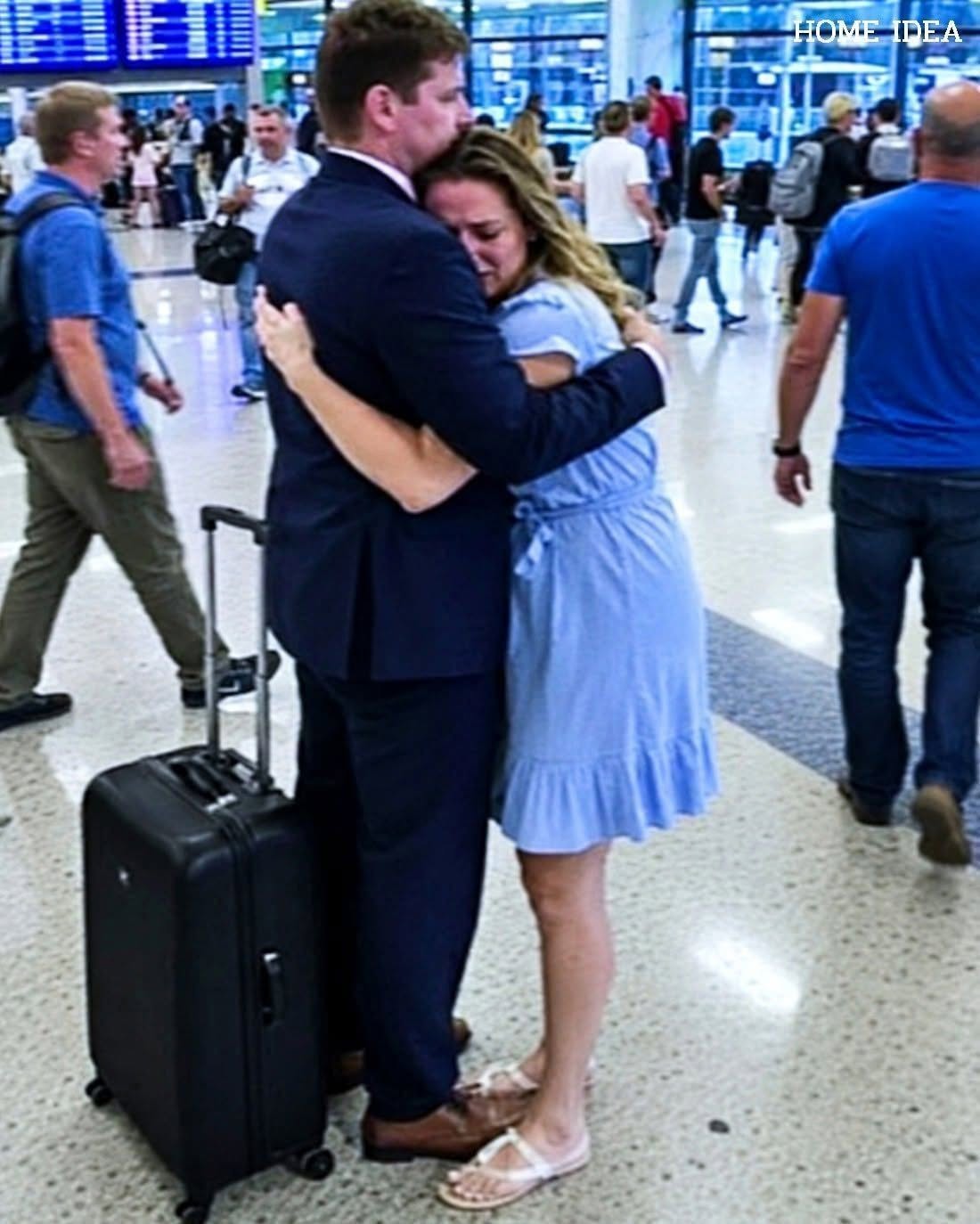
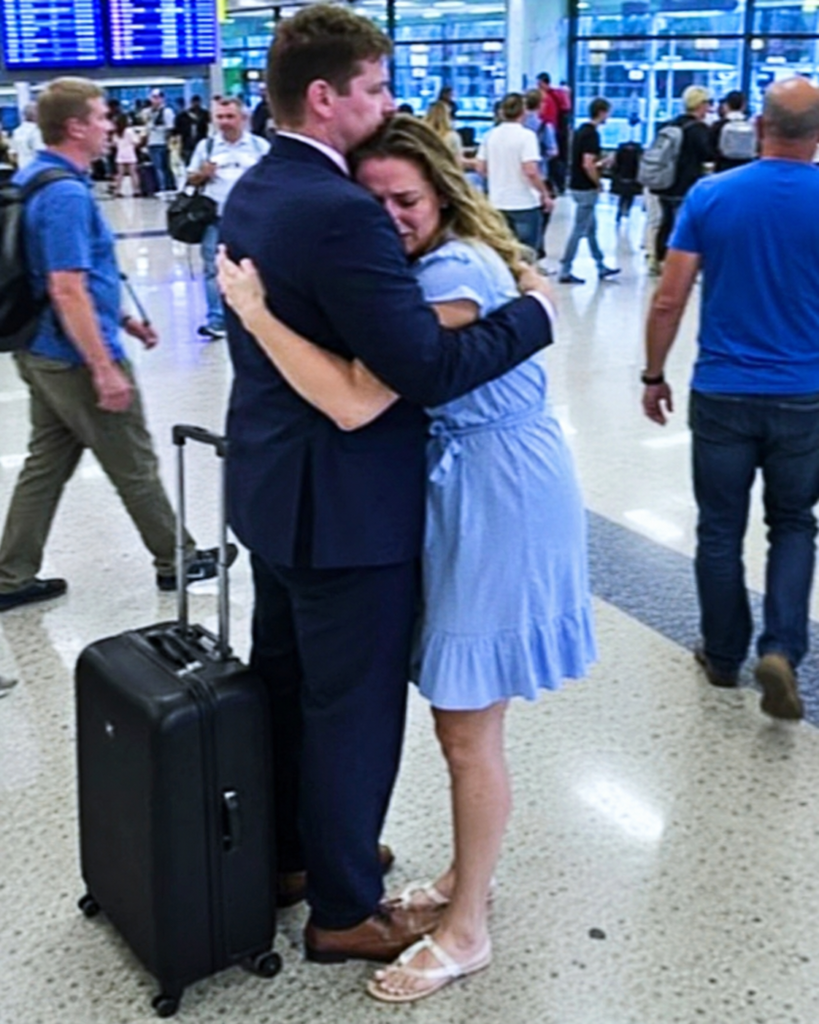
I cried in my husband’s arms at the airport as he boarded what he claimed was a two-year work assignment in Zurich.

by

The photograph was not of Lucas.

That was the first thing my mind registered, and for one strange second, relief flickered through me.

Then I looked closer.

It was a picture of our house.

Our front door.

Our porch.

Taken from across the street, slightly angled, as though whoever had taken it had been sitting in a parked car under the maple tree near Mrs. Bellamy’s mailbox.

My breath caught.

The photo showed me and Lucas leaving the house together that morning, each of us dressed for the airport. Lucas was smiling. I was looking down, pretending to search for something in my purse. It was ordinary enough, almost dull.

Except someone had been watching us.

I enlarged the image with trembling fingers.

In the reflection of the living room window, barely visible behind the porch column, was a figure standing near the side gate.

A woman.

Dark coat. Sunglasses. One hand resting on her rounded stomach.

Melanie Harper.

I stared until my eyes burned.

My phone buzzed again.

Another message.

“Don’t transfer the money yet.”

The room seemed to tilt.

I looked from the phone to my laptop screen, where the confirmation button still waited.

$720,000.00

One click.

One second.

A decision that could change everything.

I wanted to press it. Every instinct in me screamed to protect what was mine before Lucas could touch it. But the message had sliced cleanly through my anger and left uncertainty behind.

Who was this person?

How did they know what I was about to do?

My thumb hovered over the keyboard.

“Who is this?” I typed.

Three dots appeared almost immediately.

Then disappeared.

Then appeared again.

Finally, the reply came.

“Someone who knows Lucas is not the only one lying.”

I sat down slowly.

The house felt different now. Too quiet. Too open. I suddenly noticed every small sound: the refrigerator humming in the kitchen, the faint tick of the wall clock, the distant bark of a dog somewhere down the street.

For three days, I had believed I understood the shape of the betrayal. Lucas had lied. Lucas had planned to leave. Lucas had a pregnant mistress. Lucas wanted our money.

It was ugly, but it was simple.

Now, suddenly, nothing felt simple.

My phone rang.

Unknown number.

I let it ring twice, watching the screen as though it might reveal the caller’s face if I stared hard enough.

On the third ring, I answered.

For a moment, no one spoke.

Then a woman’s voice said, “Anne?”

It was quiet. Careful. Not young, not old. Maybe my age. Maybe a little older.

“Yes,” I said.

“You don’t know me.”

“That’s obvious.”

“I know this is frightening.”

A laugh escaped me, sharp and humorless. “You texted me a photo of my house and told me not to touch my own money. Frightening is one word for it.”

“I’m sorry.”

“Who are you?”

A pause.

“My name is Grace.”

The name meant nothing to me.

“How do you know Lucas?”

“I don’t. Not really.”

“That’s not an answer.”

“No,” she admitted. “It isn’t.”

I stood up again, unable to sit still. My eyes went to the study window. The curtains were open. Anyone outside could see me standing there, phone pressed to my ear, laptop glowing on the desk.

I walked over and pulled the curtains shut.

Grace heard the rings slide across the rod.

“Good,” she said softly.

My skin prickled. “Are you watching me right now?”

“No.”

“Were you watching me this morning?”

“Yes.”

The honesty was so blunt it silenced me.

“Why?”

“Because I needed to make sure Lucas actually left.”

Something cold moved through my chest.

“He left,” I said. “He got on the plane.”

“To San Diego,” she replied.

I closed my eyes.

Not Zurich.

Not even Palm Springs directly.

San Diego.

“He had a connection,” she continued. “A private car booked from there. Palm Springs by evening.”

I tightened my grip on the phone. “How do you know that?”

“Because I’ve been following his arrangements for six weeks.”

The room seemed suddenly smaller.

I looked at the laptop again. The bank screen had dimmed. The confirmation button was still there, waiting like a trap.

“Grace,” I said slowly, “you have about ten seconds to explain why I shouldn’t call the police.”

“You probably should,” she said. “Eventually.”

“Eventually?”

“Not before you look in your safe.”

My eyes shifted toward the hallway.

We had a safe in the back of the coat closet. Fireproof, heavy, bolted into the floor. Lucas kept passports there, insurance documents, property papers, birth certificates. I hadn’t opened it in months.

“What’s in my safe?”

“That depends on what he removed.”

I swallowed.

“Removed?”

“Lucas was at your house yesterday afternoon while you were at the dentist.”

I said nothing.

I had gone to the dentist at two. Lucas had told me he was at the office tying up loose ends before his so-called international transfer.

“He left with a folder,” Grace said. “Blue. Legal size.”

“How do you know?”

“Because I was parked outside.”

The anger returned, but now it had nowhere clean to land.

“You were stalking my husband.”

“I was trying to understand what he was doing.”

“Why?”

“Because my sister is Melanie Harper.”

That name dropped between us like glass breaking.

For a few seconds, I could not speak.

I had imagined Melanie in fragments: the other woman, the smiling coworker in holiday party photos, the person Lucas texted too late at night, the woman who had taken what was mine. I had not imagined her having a sister. A family. Someone worried enough to follow her.

Grace exhaled shakily.

“Anne, I know what you found on his laptop. I know about the condo. I know about the pregnancy. But there are pieces you don’t have.”

My voice came out quieter than I expected.

“Is Melanie with him?”

“No.”

That surprised me.

“She isn’t?”

“She thinks he’s in Zurich.”

I sat back down.

For a while, neither of us spoke.

The clock ticked on the wall.

Outside, a car passed slowly down the street, its engine fading into afternoon silence.

Finally, I said, “You need to start from the beginning.”

Grace gave a small, tired laugh.

“I wish I knew where the beginning was.”

“My mom flies an F-22 fighter jet.”

by

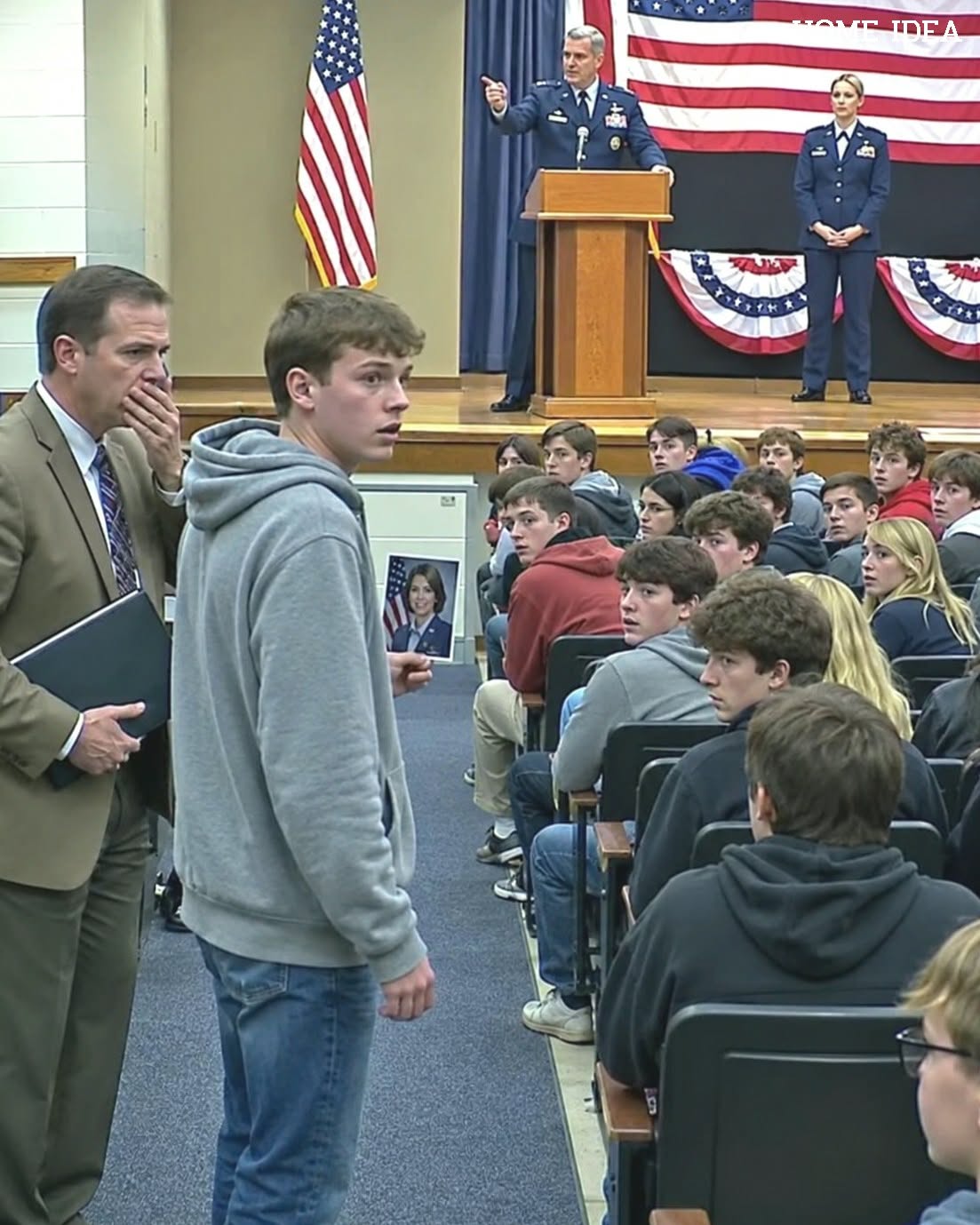
The whole auditorium laughed when my teacher said my mother was probably just a secretary who liked old airplanes.I was thirteen years old, standing behind a wooden podium with my hands shaking over a stack of note cards I had spent two weeks writing. Behind me, a projector screen showed a photograph of my mother in a flight suit, standing beside an F-22 under a gray Nevada sky. She looked younger in the picture, her hair tucked under a helmet, her smile small and tired, one hand resting against the aircraft like it was an old friend.

The title of my presentation was simple.

My Hero: Captain Rachel Miller.

I had practiced it every night in my bedroom until I could say the words without stumbling. I wanted the class to know what I knew: that my mother was more than the woman who burned toast on Saturday mornings, sang old Motown songs while folding laundry, and fell asleep on the couch during nature documentaries.

She had flown fighter jets.

She had served her country.

She had raised me alone.

To me, that was enough to make her a hero.

But Mr. Reynolds smiled when I said she was an F-22 pilot.

Not kindly.

Not with interest.

With that thin, amused smile adults use when they have already decided a child is lying.

Advertisements
“Lucas,” he said, leaning back against his desk in front of the whole eighth grade, “are you sure your mother flew that aircraft? Maybe she worked near it. Maybe she was administrative support. There is no shame in that.”

The first laugh came from the back row.

Then another.

Then half the auditorium joined in.

My face burned.

“She was a pilot,” I said.

Mr. Reynolds lifted one hand. “All right, all right. Let’s not get defensive. These career presentations are about real information, not family legends.”

Family legends.

The words hit me harder than the laughter.

I looked out at the rows of students, at the boys who had already mocked my old sneakers that morning, at the girls whispering behind their hands, at the teachers sitting along the wall with uncomfortable smiles. The annual Veterans and Service Assembly was supposed to end with a guest speaker from Washington, a retired admiral named Carter, but my presentation had been scheduled first because Mr. Reynolds said it would be “nice for a student to open.”

Now I understood what he meant.

Nice, as long as I stayed small.

I looked down at the photograph of my mother.

For one second, I wanted to run.

Then the back doors of the auditorium opened.

The laughter died so quickly it felt like someone had cut power to the room.

The first thing I noticed was the silence.

Not the quiet that comes when a teacher asks for attention. Not the polite hush before an announcement. This silence fell across the auditorium like a storm front, heavy and sudden, pressing every breath flat.

My mother stood at the entrance in a dark Air Force dress uniform, her cap tucked beneath one arm, silver wings pinned over her heart. Her hair was pulled back neatly. Her shoes shone under the fluorescent lights. She did not look like the woman who forgot coupons at the grocery store or asked me to open jars because her hands still ached when it rained.

She looked like someone carved out of discipline and sky.

Admiral Carter, who had been waiting near the stage to give his speech, remained at the microphone.

For the first time since he entered the building, his polished expression changed.

“Captain Rachel Miller,” he said, his voice carrying across the auditorium, “it is an honor to see you again.”

A thousand heads turned back to me.

For once, nobody laughed.

I rose slowly, my legs weak beneath me. Mr. Reynolds stood near the aisle, pale and stiff, as if the floor had shifted under him and he could no longer trust it. When I passed him, he opened his mouth, but no words came out.

Mom met me halfway down the aisle.

For one second, her face softened, and she was just my mother again.

“You okay, kiddo?” she whispered.

I nodded, though my throat felt locked.

We walked onto the stage together.

Admiral Carter shook my mother’s hand first. Not a casual handshake. Not polite. He held her hand between both of his for one brief moment, like a man greeting someone who had once carried him across a fire he still dreamed about.

Then he turned to me.

“Lucas Miller,” he said, “your mother is not only an F-22 pilot. She is one of the finest officers I have ever served with.”

The silence became heavier.

“She flew missions most people will never hear about,” he continued. “She protected pilots, soldiers, and civilians whose names she never knew. And years ago, during Operation Night Glass, she made a decision that saved my life.”

A murmur moved through the auditorium.

My mother’s expression did not change, but her fingers tightened around the brim of her cap.

“Sir,” she said quietly, “that mission is not something I discuss.”

“I know,” Admiral Carter replied. “But courage deserves a witness.”

He turned toward the students.

“There was a storm over enemy territory. Communication failed. Two aircraft were damaged. Captain Miller had every reason to turn back. Instead, she stayed. She guided a wounded pilot through hostile airspace with one engine failing and fuel dropping fast. She refused to abandon him.”

His eyes found me again.

“That wounded pilot was me.”

My chest tightened.

I had heard pieces of my mother’s service before, but never this. She always said war stories belonged to the people who survived them and the people who didn’t. When I asked about medals, she said metal was lighter than memory. When I asked about the old squadron patch in her closet, she said some doors were better left closed.

The auditorium erupted in applause.

Not polite applause.

Thunder.

Students stood. Teachers stood. Even the boys who had mocked me at lunch rose awkwardly, their faces red. Mr. Reynolds clapped slowly, looking like every sound hurt him.

But Mom did not smile.

She only looked at me.

And in her eyes, I saw something I had never seen before.

Fear.

After the assembly, everyone wanted to talk to her.

Principal Harris apologized three times before we reached the hallway. Teachers shook her hand and thanked her for her service. Students asked for photographs. The same boy who had joked that my mom probably bought her uniform at a costume store stared at his shoes and mumbled, “Sorry, Lucas.”

Mr. Reynolds approached last.

“Captain Miller,” he said, his voice thin. “Lucas, I owe you both an apology. I made an assumption.”

My mother studied him for a long moment.

“No,” she said. “You made a choice.”

He swallowed.

“I’m sorry.”

She nodded once, not warmly.

“Then be better tomorrow.”

We left before anyone could ask more questions.

Outside, the autumn air felt sharp and clean. Mom walked quickly toward our old blue sedan, her uniform shoes clicking against the pavement. I had to almost jog to keep up.

“Mom,” I said, “why didn’t you tell me about Admiral Carter?”

She unlocked the car.

“Because some stories don’t end when people think they do.”

That answer made no sense.

Before I could ask what she meant, she stopped.

Across the parking lot, a black SUV sat near the curb. Its windows were tinted so dark they reflected the gray sky. A man in a charcoal suit leaned against the driver’s door, arms folded. He was tall and thin, with gray at his temples and one side of his face partly hidden by shadow.

Mom saw him.

Everything about her changed.

Her shoulders lowered. Her face went still. Her right hand shifted slightly, not toward a weapon, but toward where one would have been if she were carrying one.

“Get in the car, Lucas.”

“Who is that?”

“Now.”

I got in.

She did not start the engine. She watched the man. He watched her.

Then the man lifted one hand and touched two fingers to his temple in a small salute.

Mom whispered one word.

“No.”

The man returned to the SUV and drove away.

For the first time in my life, my mother looked shaken.

That night, she locked every door twice.

She pulled the curtains shut. She checked the windows. She took an old metal box from the back of her closet and placed it on the kitchen table.

I had seen that box only once before, years earlier, when I was seven and looking for Christmas wrapping paper. Mom had taken it from me gently but firmly and said, “Not this, Lucas.”

Now she opened it.

Inside were documents, medals, a faded squadron patch, and a photograph I had never seen.

Mom stood in the photo beside Admiral Carter and three other pilots. They were younger, smiling near a jet hangar under white desert sun. One face had been scratched out with black ink.

“Who is that?” I asked.

Mom closed the box halfway, then stopped.

Her jaw tightened.

“Someone who should still be dead.”

The room seemed to shrink around us.

“Lucas,” she said, kneeling in front of me the way she used to when I was little, “today changed things. Admiral Carter recognized your name in public. That means people who were watching him now know where we are.”

“People?”

She took my hands.

“I need you to listen carefully. Your presentation was true, but it was not the whole truth.”

A car passed outside. Its headlights slid across the curtains like searching eyes.

“Before I retired,” she continued, “I was part of a classified unit. We stopped something from being sold: technology that could make aircraft disappear from radar completely. Not stealth the way people talk about it on television. Something beyond that. A guidance and masking system designed to bend detection around an aircraft for short windows of time.”

I could barely breathe.

“The project was called Ghostwing.”

The word sounded unreal in our kitchen, next to my algebra book and the chipped mug Mom used every morning.

“We destroyed it,” she said. “At least, we thought we did.”

“And the man in the parking lot?”

Her eyes moved toward the dark window.

“His name is Elias Voss. He was one of ours.”

“The scratched-out face?”

She nodded.

“He betrayed us.”

I looked at the metal box, at the photo, at the black ink where a face should have been.

“But you said he should be dead.”

“He crashed over the Black Sea twelve years ago.”

“Maybe it wasn’t him.”

Mom’s silence answered before she did.

“It was him.”

The phone rang.

Both of us froze.

Not her cell phone. The old wall phone in the kitchen, the one we almost never used anymore. Mom stood slowly, crossed the kitchen, and answered without saying hello.

A voice crackled faintly through the receiver. I could not hear the words, only the tone: controlled, urgent, afraid.

Mom’s face went white.

She hung up.

“Pack a bag,” she said.

“Why?”

She grabbed the metal box.

“Because Admiral Carter is missing.”

Fifteen minutes later, we were on the highway, the town disappearing behind us.

Rain began to fall, thin silver lines striking the windshield. Mom drove with both hands on the wheel, eyes constantly checking the mirrors. She had changed out of her dress uniform into jeans, boots, and a dark jacket, but she still carried herself like the captain from the auditorium.

“Where are we going?” I asked.

“To someone I trust.”

“From the Air Force?”

“No,” she said. “From before.”

I had no idea what before meant.

We drove for nearly two hours, leaving streetlights behind for pine forests and empty roads. Finally, Mom turned onto a gravel path almost hidden between trees. Branches scraped the sides of the car. At the end stood a small cabin with no porch light.

The front door opened before we knocked.

A woman in her sixties stood there holding a shotgun like she knew how to use it.

“Well,” she said, lowering the barrel, “Rachel Miller. You picked a hell of a night to come back.”

Mom exhaled.

“Hello, Aunt June.”

I stared at her.

“You told me Aunt June lived in Arizona.”

“I lied.”

Aunt June looked me over.

“This the boy?”

Mom nodded.

Aunt June’s expression softened for half a second.

“He has your eyes. Poor kid.”

Inside, the cabin looked ordinary at first. Old plaid couch. Woodstove. Books stacked everywhere. A framed picture of a trout no one looked proud of catching. Then Aunt June moved a bookshelf aside and revealed a steel door behind it.

Behind that door was a room filled with radios, maps, old computers, encrypted monitors, and walls covered in photographs. Red string connected faces to locations. Dates were written on tape beneath satellite images. At the center of one board was Admiral Carter.

Beside him was Elias Voss.

Aunt June poured coffee into a mug and slid it to Mom.

“Carter vanished twenty minutes after the assembly,” she said. “Security cameras went black. His driver was found unconscious. No blood.”

Mom closed her eyes.

“He wanted me to see him.”

“Voss?”

“Yes.”

Aunt June tapped a photo on the wall. It showed Voss younger, smiling beside my mother near a hangar. Without the scar and shadow, he looked almost kind.

“He’s been moving again,” Aunt June said. “Whispers out of Europe. Missing engineers. Dead contractors. Someone is rebuilding Ghostwing.”

Mom looked at me.

I suddenly understood why she had never told stories.

Because stories had shadows.

And now those shadows had followed us home.

Aunt June turned to me.

“Lucas, did anyone at school touch your mother’s photograph?”

I thought back.

My notebook. The printed picture. Mr. Reynolds taking it from my hand before the presentation and holding it long enough to smirk.

“Yes,” I said. “My teacher.”

Mom and Aunt June exchanged a look.

“What?” I asked.

Mom opened the metal box and took out the original photograph, the same one I had copied for class.

Aunt June held it beneath a blue light.

A tiny symbol glowed near the edge.

A wing.

A ghostly, broken wing.

Mom whispered, “He marked it.”

Before anyone could move, every monitor in the room flickered.

Static filled the screens.

Then a face appeared.

Elias Voss.

Older than in the photograph. Thinner. One side of his face scarred from temple to jaw. But alive.

“Rachel,” he said, smiling faintly. “Still running toward danger. I always admired that.”

Mom stepped in front of me.

“Where is Carter?”

“Safe. For now.”

“What do you want?”

Voss leaned closer to the camera.

“Not what. Who.”

His eyes shifted, as if he could see through the screen directly to me.

“The boy.”

Mom’s voice turned cold.

“You come near my son, I’ll bury you properly this time.”

Voss smiled wider.

“You never told him, did you?”

The room went silent.

Mom did not move.

Voss continued, almost gently, “Lucas, ask your mother why Ghostwing responded only to one pilot’s neural signature. Ask her why they shut the program down after you were born.”

My skin went cold.

“Mom?” I whispered.

Voss’s image glitched.

“She saved Carter,” he said. “But she saved you first.”

The monitors died.

For several seconds, the only sound was rain hammering the roof.

Then, from somewhere above us, a low mechanical hum rolled across the sky.

Aunt June grabbed the shotgun.

Mom grabbed my arm.

The lights went out.

In the darkness, the cabin shook as something passed overhead, something huge, silent, and invisible except for the rain bending around its shape.

Mom pulled me close and whispered the words that changed my life forever.

“Lucas, your father didn’t die in a crash.”

Outside, the invisible aircraft circled back.

And from the dead monitors, Voss’s voice returned one last time.

“Hello, son.”

For a moment, I forgot how to breathe.

I had lived thirteen years with a photograph of a father I barely remembered. Mom told me he died when I was a baby, testing an aircraft over the Black Sea. She told me he was brave. She told me he loved me. She told me the crash was so severe there had been nothing to bring home but a folded flag and a sealed report.

Now the voice coming through Aunt June’s dead monitors belonged to the man from the scratched-out photograph.

Elias Voss.

A traitor.

A ghost.

My father.

Mom pulled me away from the screens and shoved the metal box into Aunt June’s hands.

“We need the bunker tunnel.”

Aunt June was already moving.

“Been waiting twelve years for you to ask.”

The cabin shook again. Dust fell from the ceiling. Somewhere outside, branches snapped though there was no wind strong enough to break them. The hum overhead deepened, low and unnatural, like thunder trapped inside machinery.

Aunt June yanked open a trapdoor beneath a rug.

“Move.”

Mom pushed me down first.

The stairs were narrow and metal, descending into darkness. I stumbled, caught the railing, and looked back just as a white-blue light swept across the cabin windows above us.

“Mom!”

“I’m right behind you.”

She slammed the trapdoor shut.

Below, the tunnel smelled like wet stone and old electricity. Aunt June flicked on a red flashlight and led us through a passage barely wide enough for two people. The hum faded behind us, but my pulse filled my ears.

“Tell me,” I said.

Mom did not answer.

“Tell me now.”

She stopped.

For the first time that night, she looked less like a captain and more like a woman carrying too much weight for too many years.

“Elias Voss was part of Ghostwing,” she said. “He was brilliant. Dangerous. Charming when he wanted to be. He believed the technology should not be destroyed. He believed whoever controlled invisibility controlled the next century.”

“And you married him?”

Her face tightened.

“No. I loved him before I understood what ambition could turn into.”

That answer hurt more than a simple yes.

“You said he died.”

“I believed he did.”

“But he’s my father?”

Her eyes filled.

“Yes.”

The tunnel seemed to tilt around me.

I wanted to be angry. Maybe I was. But fear was louder. Confusion louder still. My whole life had changed in a single sentence, and there was no time to sit down inside it.

Aunt June called back, “Rachel, less confession, more moving.”

We kept going.

The tunnel emerged inside what looked like an old storm cellar beneath a detached shed half a mile from the cabin. Aunt June had an old pickup hidden there beneath a tarp. She threw the keys to Mom.

“Carter’s locator pinged once,” Aunt June said. “Before they grabbed him, he triggered an old emergency code. He’s at Raven Mesa.”

Mom went still.

“I thought that facility was sealed.”

“It was.”

“What is Raven Mesa?” I asked.

Mom opened the truck door.

“The place where Ghostwing was born.”

We drove through the night.

Aunt June came with us, riding shotgun with the metal box on her lap and a radio headset over one ear. Mom drove like she had memorized every road in America. I sat in the back, gripping the seat belt with both hands while rain hammered the windshield.

Nobody spoke for nearly twenty minutes.

Then Aunt June said, “Air traffic is blind over the northern corridor.”

Mom’s jaw tightened.

“He’s testing it.”

“Or showing off.”

“Voss never did anything for one reason.”

I leaned forward.

“What does he want with me?”

Mom’s eyes met mine in the rearview mirror.

“Ghostwing’s first interface was designed around pilots. It needed reflex, pattern recognition, spatial instinct. Voss pushed it further. Too far. He wanted the system to respond directly to the human nervous system.”

“That doesn’t explain me.”

She looked back at the road.

“When I was pregnant with you, I was exposed to part of the system during the final sabotage. Not radiation. Not poison. A signal pattern. A neural imprint. We didn’t know what it meant. After you were born, the system responded to your brain activity on a passive test.”

I stared at her.

“I was a baby.”

“I know.”

“So they shut it down?”

“I shut it down,” she said. “I destroyed the core and buried the research. Voss tried to stop me. His aircraft went down during the extraction. Carter survived because I chose to pull him out before pursuing Voss.”

“And now Voss wants me because…”

“Because if he rebuilt Ghostwing, he may still need the living key.”

The living key.

I sat back slowly.

Outside, the night blurred past.

I wanted to say it was impossible, but the invisible aircraft had bent rain around itself over Aunt June’s cabin. Impossible had already crossed the sky.

Near dawn, we reached desert country.

Raven Mesa appeared first as a shape against the horizon, a dark ridge under a fading storm. The facility itself was hidden inside the rock, marked only by a rusted security fence and a road that looked abandoned.

Aunt June scanned the gate with equipment that looked older than she was.

“Still powered,” she said. “That’s unpleasant.”

Mom parked behind a line of scrub trees.

She turned to me.

“Lucas, listen to me. If anything happens, you stay with June.”

“No.”

“Lucas.”

“No. You don’t get to tell me I’m part of this and then tell me to wait in a truck.”

Her face hardened, then softened.

“You are thirteen.”

“And apparently the living key to an invisible airplane.”

Aunt June snorted.

“He has your mouth too.”

Mom closed her eyes for one second.

Then she handed me a small radio.

“You do exactly what I say, when I say it.”

I nodded.

We entered through a maintenance tunnel Aunt June remembered from “a year I refuse to discuss.” Inside, Raven Mesa smelled like dust, metal, and old secrets. Emergency lights glowed along the walls. Somewhere deep in the facility, machinery pulsed.

We found Admiral Carter in a control room, tied to a chair but alive.

His face was bruised. One eye was swollen. But when he saw Mom, he smiled faintly.

“Rachel,” he said. “Always late.”

She cut him free.

“Always ungrateful.”

He looked at me.

“Lucas.”

I stood awkwardly.

“Sir.”

He grimaced as he stood. “Your presentation was excellent.”

Aunt June rolled her eyes. “We can admire the school project after we stop the ghost plane.”

Carter pointed toward the main hangar.

“He has a prototype. Not stable. He needs Lucas to complete the interface.”

Mom looked at the monitors. A wireframe image of the aircraft rotated slowly on one screen. Sleek. Black. Almost beautiful in a terrifying way.

Then Voss’s voice echoed through the speakers.

“Rachel. You came.”

Mom turned toward the ceiling.

“It’s over, Elias.”

“No,” he said. “It is finally beginning.”

A door at the far end of the control room slid open.

Voss stepped in.

Two armed men followed him.

He looked at Mom first. Then at me.

Seeing him in person was worse than the screen. His scar twisted one side of his face, but his eyes were bright and strangely sad.

“My son,” he said.

I stepped back.

Mom moved in front of me.

“You don’t get to call him that.”

Voss smiled faintly.

“I wondered if he had your courage.”

“He has his own.”

For a moment, something almost human passed across Voss’s face.

Then it vanished.

“Lucas,” he said, “your mother made you afraid of me. I understand. But I am not your enemy. I built something that could end wars before they begin. Imagine aircraft that cannot be detected. Evacuations without losses. Defense without destruction.”

“Control,” Mom said. “That’s what you wanted.”

“I wanted advantage.”

“You wanted power.”

Voss looked at her with old bitterness.

“You destroyed history because you were afraid.”

“I destroyed a weapon because you stopped caring who it would be used against.”

His voice sharpened.

“I cared about the future.”

“You cared about being worshiped by it.”

The room tightened.

Voss lifted one hand, and the men behind him raised their weapons.

Admiral Carter stepped forward.

“Elias, take me. Let the boy go.”

Voss did not even look at him.

“Carter, you were always noble at inconvenient times.”

He turned to me.

“Lucas, the aircraft will respond to you. You can feel it already, can’t you?”

I wanted to say no.

But deep beneath the facility, I could feel something.

A pulse.

Not sound exactly. Not thought. More like pressure behind my eyes, a rhythm calling to a part of me I had never known existed.

Mom saw my face.

“Don’t listen.”

Voss smiled.

“He hears it.”

Then everything happened at once.

Aunt June dropped a smoke device from her sleeve. The room filled with gray. Mom shoved me behind a console. Carter tackled one of the armed men with the kind of speed I did not expect from an admiral. Aunt June shouted something rude and swung the shotgun like a club.

Mom grabbed my wrist.

“Run.”

We ran through the smoke into the hangar.

The Ghostwing aircraft sat in the center, its surface shimmering like heat above asphalt. Men moved around it, shouting as alarms began to blare. The pulse in my head grew stronger.

Lucas.

I stopped.

Not because I wanted to.

Because the aircraft knew me.

Mom pulled me hard.

“Lucas!”

Voss’s voice came through the hangar speakers.

“Bring him to the cockpit, Rachel. Or I lift the aircraft and let the unstable field burn through everything in this facility.”

Aunt June cursed over the radio.

“He’s not bluffing. The field is overloading.”

Mom looked at the aircraft, then at me.

For the first time, she looked truly afraid.

I understood then what courage was.

It was not standing on a stage while people clapped.

It was my mother, years earlier, pregnant and terrified, choosing to destroy a program powerful men wanted to keep. It was Carter telling Voss to take him instead. It was Aunt June living in hiding for twelve years because she refused to let the dead stay buried wrong.

And maybe it was me, a thirteen-year-old boy who had started the day being laughed at in an auditorium, stepping toward the thing everyone feared.

“I can stop it,” I said.

“No.”

“Mom, I can feel it.”

“No, Lucas.”

I took her hand.

“You saved Carter. You saved me. Let me save you.”

Her eyes filled.

Then she nodded once, though it looked like it broke her.

We climbed into the Ghostwing cockpit together.

The moment my hands touched the controls, the world vanished.

Not blackness.

Sky.

Endless sky.

I saw signals like threads of light, radar waves bending, the aircraft’s unstable field twisting in on itself. I saw Voss’s code trying to lock me in, trying to make my mind a switch inside his machine.

Then I heard Mom.

Not through my ears.

Through memory.

Check the locks. Walk through the door.

I pushed back.

The aircraft screamed.

Outside, lights exploded across the hangar. The field collapsed inward, not outward. Panels sparked. The pulse in my head became pain, then pressure, then silence.

When I opened my eyes, Mom was holding me.

The aircraft was dead.

Voss stood below the cockpit, staring up in disbelief.

“No,” he whispered.

Admiral Carter and Aunt June had him surrounded with security personnel who had finally arrived through the facility’s emergency entrance.

Mom climbed down first.

Voss looked at her, broken fury in his eyes.

“You took my son.”

Mom’s voice was calm.

“I raised mine.”

Voss looked at me then.

For one second, I saw the life that might have been. A father at birthday parties. A man teaching me to ride a bike. Someone beside my mother in old photographs without his face scratched out.

Then I saw the truth.

He had not come for me because he loved me.

He came because I was useful.

I stood beside my mother.

“My name is Lucas Miller,” I said. “Not Voss.”

His face went still.

That was the last thing I ever said to him.

The official story was simple.

A retired officer suffered a medical emergency after a school assembly. Captain Rachel Miller assisted in locating him at a private facility. A technology theft investigation was ongoing. No further details were available.

People believed what they were allowed to believe.

At school, everything changed.

Mr. Reynolds was placed on administrative leave after several parents complained, though Mom said the real lesson was whether he became better when nobody was watching. Admiral Carter returned months later to speak again, this time with a cane and a grin. He shook my hand in front of everyone and said, “Good to see you, Mr. Miller.”

Nobody laughed.

Aunt June did not move to Arizona. She visited for Thanksgiving and scared Mr. Reynolds when she came to parent-teacher night carrying a purse large enough to make him nervous.

Mom kept flying, though not the way she used to. She worked more with training now, teaching younger pilots how to think under pressure. Sometimes I caught her staring at the sky with an expression I could not read.

One night, months after Raven Mesa, I found her in the backyard.

“Do you miss it?” I asked.

“Flying?”

I nodded.

She looked up at the stars.

“Yes. But not all of it.”

I stood beside her.

“Do you regret not telling me?”

She was quiet for a long time.

“I regret that the truth had danger attached to it.”

“That’s not an answer.”

She smiled sadly.

“You have my mouth.”

“So I’ve heard.”

She looked at me then.

“I wanted you to have a childhood that belonged to you. Not to Ghostwing. Not to Voss. Not to the war stories people tell in rooms where boys decide what kind of men they’ll become.”

I thought about the auditorium. The laughter. The photograph. Admiral Carter’s voice. My mother walking through those doors like a truth nobody could mock.

“I think I still did,” I said.

Her eyes softened.

“You did?”

“Yeah. It just had a weird ending.”

She laughed then.

A real laugh.

The kind I knew from Saturday mornings when she burned toast and blamed the toaster.

Years later, I still think about that day at school.

I think about how quickly people laughed when they thought my mother was ordinary, and how quickly they stood when someone powerful told them she was not. I think about Mr. Reynolds saying family legends as if love made truth less reliable. I think about Admiral Carter standing at the microphone, giving my mother the witness she never asked for but deserved.

But mostly, I think about Mom in that parking lot, seeing a ghost from her past and still putting herself between danger and me.

That is what heroes do.

Not just in aircraft.

Not just in classified missions.

Not just in stories people can clap for.

Heroes stand between what they love and what comes to claim it.

My mother had wings pinned over her heart that day.

But I learned later that the real wings were not made of silver.

They were made of every choice she made to protect me, even when protection meant carrying secrets heavy enough to bend her whole life.

And when the world finally found us, when the past circled overhead invisible and hungry, she did what she had always done.

She stood.

So did I.

THE END

Country Music legend dead at 86

by

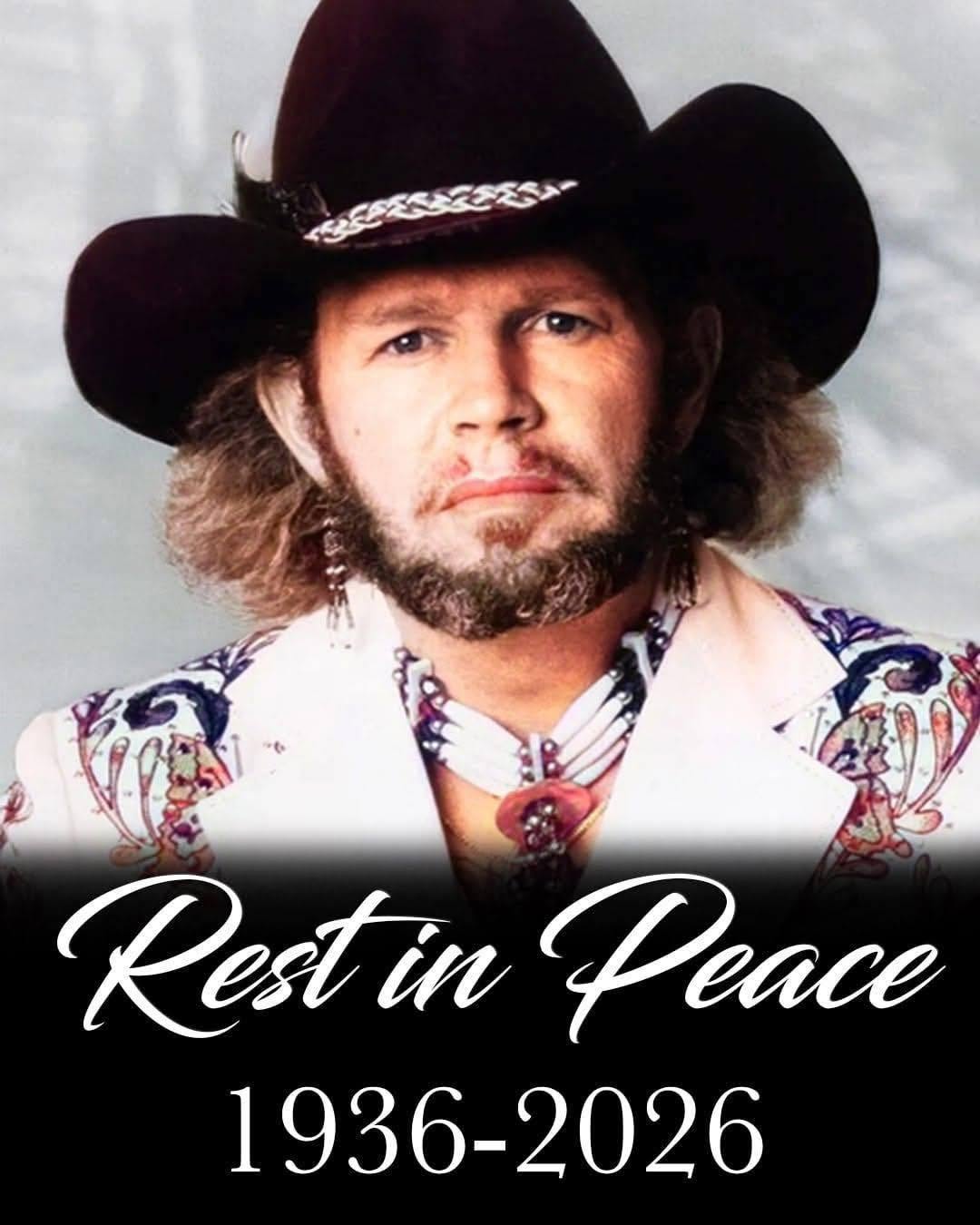
David Allan Coe, the outlaw country icon behind classics like “You Never Even Called Me by My Name,” has died at 86.

His passing was confirmed by Rolling Stone on Wednesday, April 29, though no cause of death had been announced at the time.

Born on September 6, 1939, in Akron, Ohio, Coe’s early life was anything but conventional. He spent much of his youth in and out of correctional facilities, experiences that would later shape the rebellious, outsider image that defined both his life and his music.

His musical style blended elements of blues, rock, and country, and his voice was often described as a deep, raspy baritone.

When he arrived in Nashville in 1967, success didn’t come overnight — but it came. Coe first made waves as a songwriter, landing a major hit when Tanya Tucker took “Would You Lay With Me (In a Field of Stone)” to No. 1 in 1973.

David Allan Coe (Michael Ochs Archives/Getty Images
That breakthrough opened doors, earning him a deal with Columbia Records.

By 1974, Coe stepped fully into the spotlight with his debut album The Mysterious Rhinestone Cowboy. A year later, his album Once Upon a Rhyme delivered what would become his signature song: “You Never Even Called Me by My Name.” The track, filled with humor and self-awareness, famously includes the spoken line where Coe calls it “the perfect country and western song.”

He even wrote himself into his own legend, singing, “But the only time I know I’ll hear ‘David Allan Coe’ / Is when Jesus has His final judgment day.”

That self-referential style carried through much of his work, including songs like “Longhaired Redneck,” “Willie, Waylon and Me,” and “Son of the South.”

Though his biggest commercial success came in the 1970s, Coe proved his staying power. In 1983, he staged a comeback with Castles in the Sand, featuring the fan-favorite track “The Ride.”

His influence stretched far beyond his own recordings. Coe also penned “Take This Job and Shove It,” a No. 1 hit for Johnny Paycheck that became a blue-collar anthem.

Even in his later years, Coe never stepped away from the stage, continuing to release music and perform for devoted fans.

David Allen Coe performs to a sold out crowd during Willie Nelson’s 4th of July Picnic at The Backyard on July 4, 2010 in Austin, Texas. (Photo by Gary Miller/FilmMagic)
But his legacy is complex. Coe drew heavy criticism for controversial material in albums like Nothing Sacred (1978) and Underground Album (1982), which included racial slurs and misogynistic language. He later defended the work as parody, though the backlash never fully faded.

He also faced legal troubles later in life. In 2015, Coe pleaded guilty to obstructing IRS laws and was sentenced the following year to three years of probation, along with nearly $1 million in back taxes.

On the personal side, Coe married his sixth wife, Kimberly Hastings, in 2010. He is survived by her and his children.

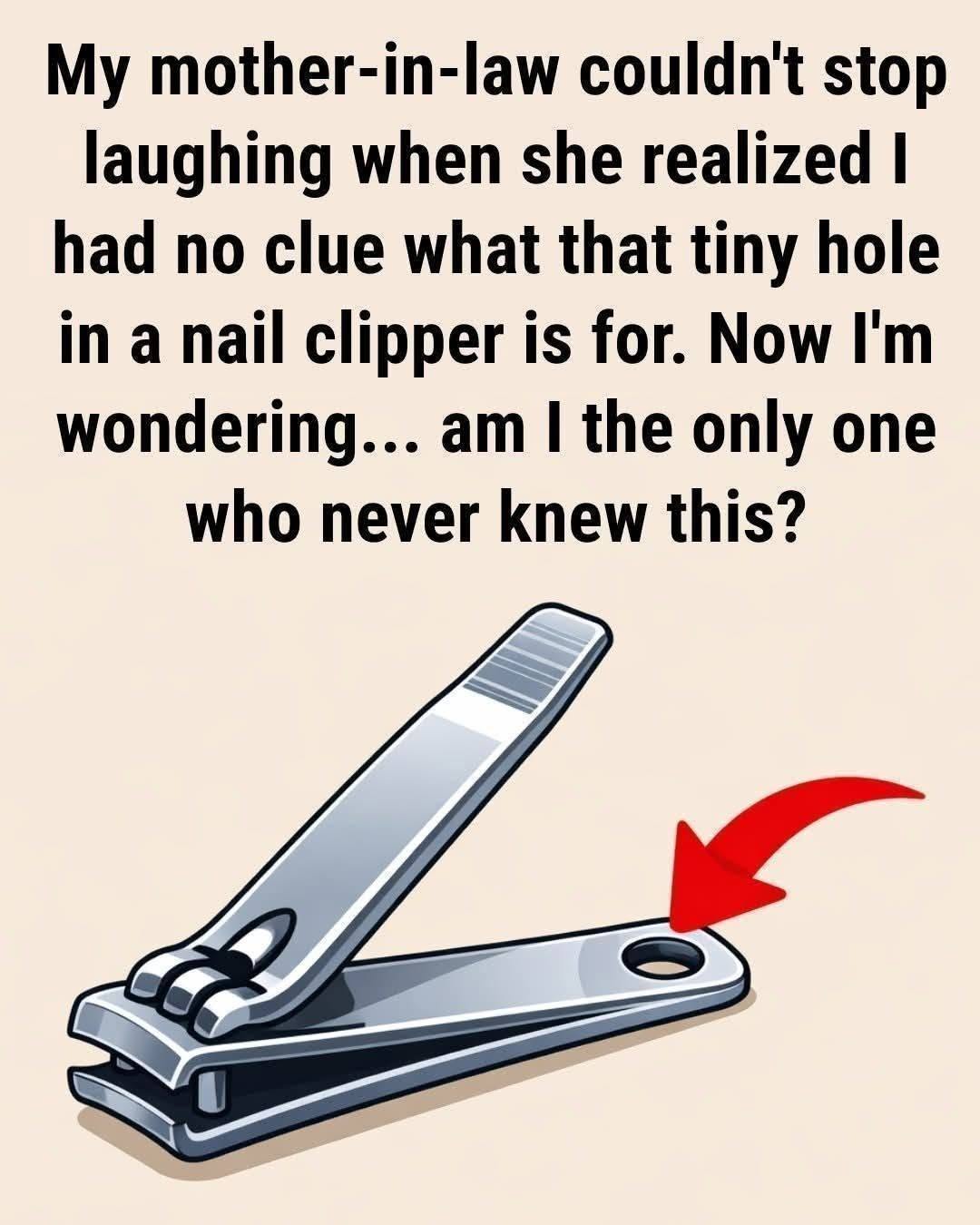
What’s the Small Round Hole on Your Nail Clipper For? A Tiny Detail with Surprising Purpose

by

Have you ever picked up your nail clipper, noticed that tiny round hole at the end, and paused to wonder… what is that even for? You’re definitely not alone. It’s one of those everyday design details most of us overlook—but it actually has a few surprisingly practical uses.

Let’s take a closer look at this small feature and why it’s there in the first place. Spoiler: it’s not random. It’s intentional, thoughtful, and quietly useful.

Cultural Context
Nail clippers have been a staple of personal grooming since the late 19th century, evolving from bulky, ornate tools into the sleek, pocket-sized versions we know today. That little hole? It reflects a broader design philosophy that emerged in the mid-20th century: form should serve function, and even the smallest details can enhance everyday life. In an era before smartphones and smart homes, thoughtful industrial design focused on making simple tools more portable, durable, and user-friendly. The hole on your clipper is a quiet legacy of that mindset—a reminder that good design doesn’t shout; it simply works.

Why This Matters
Appreciating thoughtful design: Noticing intentional details helps us value the craftsmanship behind everyday objects.

Maximizing utility: Understanding the hole’s purpose lets you use your clipper more effectively.

Reducing clutter: Knowing how to attach or store your clipper keeps small essentials organized and accessible.

Travel smarter: A tiny feature can make grooming on the go easier and more efficient.

Curiosity over assumption: Asking “why?” about ordinary things opens the door to small but meaningful insights.

First, a Quick Look at Nail Clipper Design

First, a Quick Look at Nail Clipper Design
Standard nail clippers are deceptively simple tools, but they’re cleverly engineered for both function and convenience. The lever, the curved blade, the file—and yes, that little round hole—are all part of a cohesive system designed for precision, portability, and ease of use.

That hole isn’t decorative. It’s a deliberate feature with multiple practical applications, depending on how you choose to use your clipper.

1. Attaching to a Keychain (The Most Common Use)
The primary purpose of that small hole is straightforward: portability.

You can:

Attach your nail clipper to a keychain for instant access

Hook it onto a backpack, purse, or gym bag

Keep it readily available for quick grooming fixes while traveling or commuting

This is especially useful if you like to keep a clipper handy for emergencies—like a snagged nail before a meeting or a quick trim while camping.

2. Travel-Friendly Convenience
That hole makes it easier to carry your clipper without losing it in the depths of a bag or pocket.

Some people:

Clip it onto toiletry bags or Dopp kits

Attach it to zipper pulls for visibility

Use it with small carabiners to organize travel essentials

It’s a tiny detail that makes a big difference when you’re trying to keep small items secure and accessible on the go.

3. Added Grip or Leverage (Less Known Use)
In some designs, that hole can subtly improve grip or control during use.

You can:

Insert a fingertip through the hole for better stability while trimming

Use it as a pivot point for more precise maneuvering

Anchor the clipper against a surface for controlled pressure

While not its main function, this secondary benefit can make the tool easier to handle—especially for detailed trimming or for those with limited hand dexterity.

4. Multi-Tool Integration
On certain nail clippers—especially compact, travel, or multi-tool versions—the hole is part of a larger modular design.

It may be used to:

Attach small accessories like mini files, tweezers, or cuticle pushers

Connect to grooming kits or modular tool systems

Work alongside built-in features for an all-in-one grooming solution

This transforms a simple clipper into a customizable component of your personal care toolkit.

You Must Know: Why Small Design Details Matter
From a design perspective, this is a brilliant example of functional minimalism—a small addition that increases usefulness without complicating the tool.

Designers often include features like this to:

Improve portability without adding bulk

Add versatility for different use cases

Enhance user convenience through intuitive, low-effort solutions

Extend the lifespan of a tool by making it easier to store and access

That tiny hole is a testament to the idea that good design solves problems quietly, efficiently, and elegantly.

Serving Suggestions: Creative Ways to Use the Hole
Organization hack: Hang multiple clippers (yours, your partner’s, your kids’) on a small hook in your bathroom or vanity for easy access and tidy storage.

Gift-ready grooming: Attach a new clipper to a keychain or small gift tag for a practical, thoughtful present.

Emergency kit essential: Clip it to a first-aid kit, car organizer, or hiking pack for unexpected grooming needs.

Workshop or craft station: Keep one handy in your sewing kit, art supplies, or toolbox for trimming threads, labels, or small materials.

Pet care companion: Attach a pet-specific clipper to your dog-walking gear for quick nail checks on the go.

Storage Tips: Keeping Your Clipper Accessible & Protected
Keychain ready: Use a small split ring or carabiner to attach your clipper securely without damaging the hole.

Travel smart: Store your clipper in a clear toiletry pouch with the hole facing outward for quick identification.

Avoid stress: Don’t force oversized attachments through the hole, as this can warp or crack the metal over time.

Clean regularly: Wipe the clipper (including the hole) with a soft cloth to prevent buildup of nail debris or moisture.

Replace wisely: If the hole becomes misshapen or the clipper dulls, it’s time for a new one—quality tools last longer and perform better.

Frequently Asked Questions
Q: Is the hole necessary for using the clipper?

A: No—it doesn’t affect the cutting function at all. It’s purely for convenience, portability, and added usability.

Q: Can I use it for something else?

A: Absolutely! Many people get creative: hanging storage, attaching labels, organizing grooming kits, or even using it as a tiny bottle opener in a pinch (though that’s not its intended purpose).

Q: Do all nail clippers have this hole?

A: Most standard clippers do, but some minimalist, luxury, or specialty designs may skip it for aesthetic or ergonomic reasons.

Q: Will attaching it to a keychain damage the clipper?

A: Not if done gently. Use a smooth-edged ring or carabiner, and avoid excessive tugging or weight that could stress the metal.

Q: Can I enlarge the hole if I need to?

A: It’s not recommended. Altering the structure can weaken the clipper or create sharp edges. If you need a larger attachment point, consider a clipper designed with that feature.

Important Considerations: Safety & Care

This article is for informational purposes only and is not a substitute for professional product advice or safety guidelines.

Always handle sharp tools with care: Nail clippers have cutting edges—store them safely and keep them away from young children.

Check for damage: If the hole is cracked, bent, or sharp-edged, discontinue use to avoid injury or tool failure.

Hygiene matters: Clean your clipper regularly with soap and water or rubbing alcohol, especially if shared among household members.

Individual needs vary: If you have limited hand mobility or dexterity concerns, look for clippers designed with ergonomic grips or adaptive features.

That tiny round hole on your nail clipper might seem insignificant, but it’s actually a thoughtful little feature designed to make your life easier. Whether you use it for a keychain, travel convenience, better grip, or creative organization, it’s proof that even the smallest details can have a purpose.

Next time you pick up your clipper, you’ll know—it’s not just a random hole. It’s a smart bit of design hiding in plain sight, waiting to be put to use.

If this article sparked a moment of curiosity or clarity, I’d love to hear from you. Did you already know about the hole’s purpose? Do you have a creative way you use your clipper? Drop a comment below. And if you know someone who appreciates the quiet brilliance of everyday design, please share this with them.

Sometimes the greatest discoveries aren’t hidden in grand innovations—but in the small, intentional details we pass by every day.

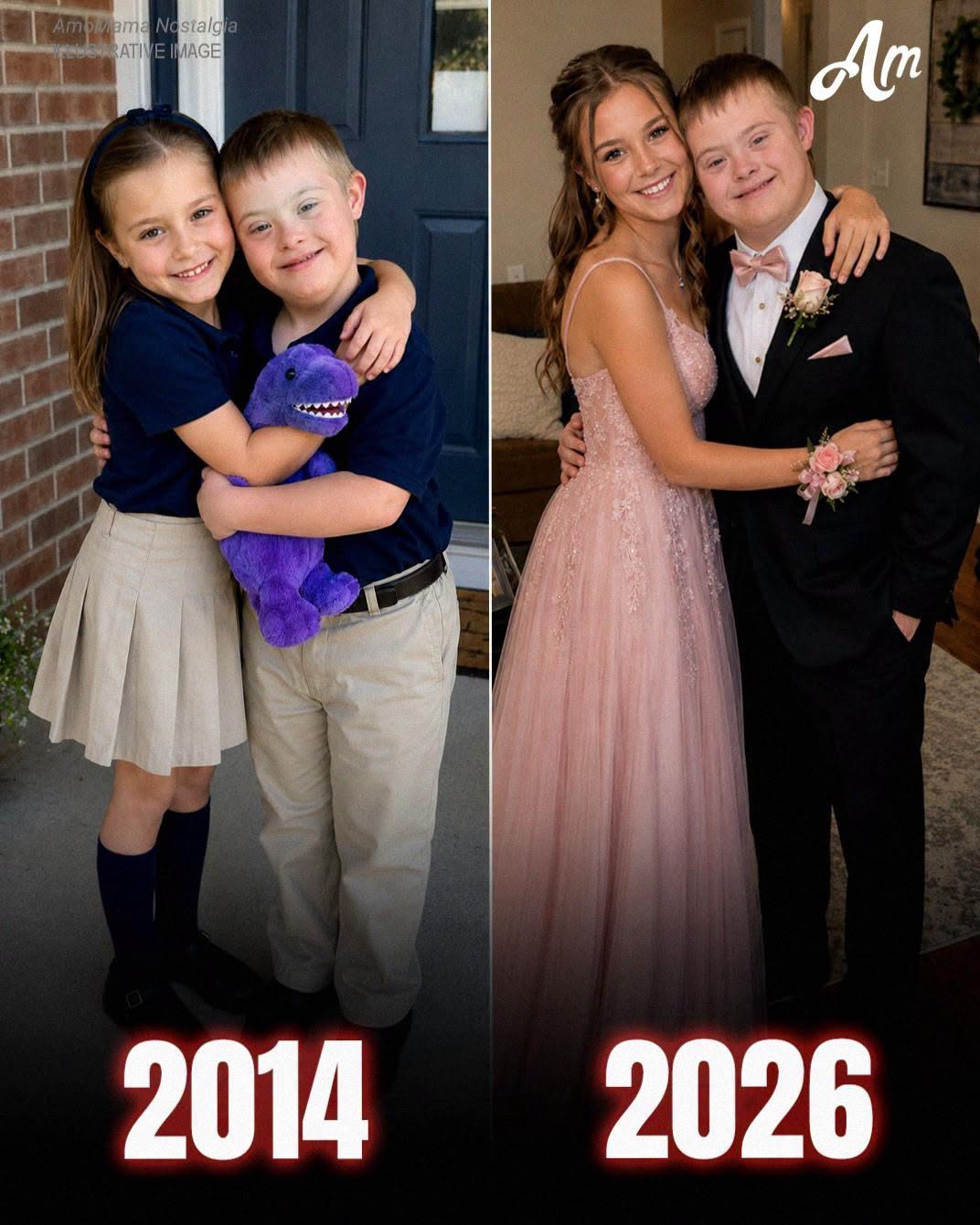
At 6, I Promised My Best Friend with Down Syndrome We’d Go to Prom Together – 12 Years Later, Mom Said I Could Go with Him Only on One Condition

by

steps while Mom repeatedly stepped the wrong direction.

Finally he sighed.

“Mrs. Jane, Chrissy dances better.”

“That’s why she’s your date.” Mom’s voice softened. “Thank you for staying.”

Noah frowned as though she’d thanked him for breathing.

“She stays too.”

“Thank you for staying.”

Mom closed her eyes.

That was the answer she’d needed for years.

***

At prom, when the first slow song began, Noah held out his hand.

“Chrissy… You owe me.”

“Twelve years?”

“Yes.”

He stepped on my shoe within five seconds.

“You’re terrible at this.”

“Your dress is badly designed.”

“Chrissy… You owe me.”

We laughed until people stared.

Nothing extraordinary happened.

Nobody applauded us.

We were simply two 18-year-olds dancing badly together.

***

Afterward, Mom waited outside.

Noah carried my heels because my feet hurt.

I carried his jacket because he was feeling hot.

At the car, he opened my door.

We were simply two 18-year-olds dancing badly together.

I climbed inside, leaned across the seat, and opened his.

Mom watched us in the mirror.

For years, she’d seen me beside Noah and thought one of us was

She finally understood.

Nobody was rescuing anybody.

Nobody was fulfilling an obligation.

Nobody was rescuing anybody.

We were just two people who had figured something out at six that adults sometimes spend their whole lives learning.

When somebody matters to you, you stay.

And sometimes, if you’re lucky, they stay too.

It is with heavy hearts that we announce the passing of this beloved and legendary actress… – Check the comments

by

# “It Is With Heavy Hearts That We Announce the Passing of a Beloved and Legendary Actress…” — Why You Should Think Twice Before Sharing

Few words can stop someone in their tracks faster than the announcement of a celebrity’s death.

For generations, actors and actresses have become part of our lives through movies, television programs, theater performances, interviews, and unforgettable characters. Even when we have never met them personally, their work can become connected to important memories from our own lives.

That is why a sudden announcement claiming that a beloved actress has died can be so emotionally powerful.

A photograph appears on social media.

The words “Rest in Peace” are written across the image.

A date of birth and an alleged date of death appear underneath.

Then comes the familiar instruction:

**“Check the comments for the full story.”**

Thousands of people begin reacting.

Some express disbelief.

Others write messages of sympathy.

Fans share memories of their favorite performances.

And before anyone has confirmed whether the claim is true, the post may already have traveled across multiple social-media platforms.

But there is an important lesson behind these posts:

**A dramatic memorial image is not the same thing as verified news.**

In the age of viral content, an emotional headline can travel much faster than the truth.

That is why celebrity death announcements—especially those appearing without a recognizable news source—deserve a second look before anyone shares them.

## The Emotional Power of a Celebrity Death Announcement

Celebrity death rumors work because they immediately trigger emotion.

A person may have watched an actress on television as a child.

Perhaps her movies were part of family traditions.

Maybe one of her performances helped someone through a difficult period.

Perhaps her character became associated with a particular stage of life.

When a person sees a message saying that actress has died, the response can be almost instinctive.

“Is this real?”

“What happened?”

“I can’t believe she’s gone.”

The emotional reaction often happens before the logical one.

That’s completely human.

But it creates an opportunity for misleading content to spread.

Someone sees a heartbreaking headline and shares it because they want friends and other fans to know.

Those people see the same post and share it again.

Within hours, an unverified statement can begin to look like established fact simply because so many people are repeating it.

Popularity, however, is not verification.

A claim doesn’t become true because thousands of people have shared it.

## The Problem With “Rest in Peace” Graphics

One of the most recognizable forms of celebrity misinformation is the memorial graphic.

These images often contain:

* A large photograph of the celebrity

* The words “Rest in Peace”

* A black, gray, or dark background

* Candles, flowers, or other memorial imagery

* A supposed date of death

* Emotional language about the person’s legacy

At first glance, such an image can look official.

But appearances can be deceptive.

Anyone with basic image-editing software can create a memorial graphic.

A photograph can be downloaded, edited, and combined with dramatic text in a matter of minutes.

The finished image may look professional without having any connection to a legitimate news organization, family representative, or official announcement.

That’s why an image alone cannot establish that a celebrity has died.

The question should always be:

**Who confirmed this?**

If the answer is unclear, the claim should be treated cautiously.

## Why “Check the Comments” Is a Warning Sign

Another familiar feature of viral posts is the instruction to look somewhere else for the supposed details.

“Full story in the comments.”

“Click below.”

“Read the first comment.”

“More information coming soon.”

These phrases are often designed to encourage interaction.

The original post may intentionally leave out important details because curiosity encourages people to click, comment, and share.

A person who sees a vague statement may immediately want to know what happened.

That curiosity becomes engagement.

And engagement is valuable.

Every interaction can increase a post’s visibility.

The more people interact with something, the more likely it may be shown to additional users.

As a result, a dramatic but unsupported claim can gain enormous exposure.

## The Economics of Clickbait

There is often a financial motivation behind sensational online content.

Many websites make money through advertising.

In simple terms, more visitors can mean more opportunities to display advertisements.

That creates an incentive for some publishers to attract as much traffic as possible.

A straightforward headline might not generate much interest.

But a headline such as:

**“Beloved Hollywood Actress Dies Suddenly—Fans Are Heartbroken”**

can generate immediate curiosity.

A reader wants to know who died.

They want to know how it happened.

They want to know whether the information is true.

And they may click before asking any of those questions.

That’s where clickbait becomes effective.

The headline doesn’t necessarily need to provide useful information.

It only needs to make the reader curious enough to continue.

## The Most Powerful Clickbait Is Emotional

Not all misleading headlines are equally effective.

The strongest ones usually involve powerful emotions.

Death is one of the strongest.

Fear is another.

So are outrage, surprise, nostalgia, and anger.

That’s why phrases such as these appear repeatedly online:

“Heartbreaking news…”

“Hollywood is in mourning…”

“Fans are devastated…”

“We have lost another legend…”

“Gone too soon…”

“Her family has confirmed…”

Each phrase is designed to create an emotional reaction.

The problem is that emotionally charged wording can cause people to lower their normal skepticism.

When someone believes a beloved actress has died, they may not stop to ask whether the claim comes from a credible source.

They simply react.

## Why False Death Reports Are Particularly Harmful

A fake death report is not harmless entertainment.

For the person involved, it can be disturbing and upsetting.

Imagine waking up and discovering thousands of strangers are mourning your death while you are still alive.

Family members may receive messages of condolence.

Friends may become frightened.

Professional colleagues may contact one another trying to determine what happened.

Fans may experience unnecessary grief.

And legitimate news organizations may have to correct the false information.

There is also a broader problem.

Repeated exposure to false stories can make people less able to distinguish reliable reporting from fabricated content.

When misinformation becomes common, people may eventually stop trusting legitimate information altogether.

## How to Verify a Celebrity Death Report

Fortunately, checking a claim does not require special investigative equipment.

A few simple steps can make a major difference.

### 1. Look for a reputable news organization

If a major celebrity has genuinely died, the announcement is likely to appear across multiple established news outlets.

Don’t rely on one random social-media post.

Search for the celebrity’s name using a reputable news source.

Look at several reports rather than accepting the first result you encounter.

### 2. Check official sources

Look for statements from the person’s representatives, family, verified social-media accounts, professional organizations, or other credible sources.

An official announcement carries considerably more weight than an anonymous Facebook post.

### 3. Look at the date

Old stories are frequently recirculated as though they are new.

A post might appear today even though the underlying event happened years ago.

Always check when the information was originally published.

### 4. Watch for vague wording

Be cautious if a post refuses to provide basic information.

Who died?

When?

Where?

What was the source?

Who confirmed it?

A legitimate report generally provides specific details.

### 5. Don’t trust an image alone

Photographs are easily reused.

A picture of a celebrity can be combined with completely false information.

Even a graphic containing a specific date doesn’t prove that the date is genuine.

### 6. Be careful with unfamiliar websites

If the post directs you to a website you’ve never heard of, look at the site’s overall appearance and information.

Does it identify its writers?

Does it provide a clear publication date?

Does it have contact information?

Are other articles equally sensational?

These clues can help determine whether you’re looking at journalism or engagement bait.

## Search Beyond Social Media

One of the biggest mistakes people make is searching only within the platform where they found the claim.

If you see a celebrity death announcement on social media, open a separate search engine and look for independent confirmation.

For example, search the celebrity’s full name alongside words such as:

“death”

“official statement”

“family”

“representative”

or “latest news.”

Then compare the results.

If hundreds of people are mourning someone but established news sources have reported nothing, that’s a reason to slow down.

The absence of credible confirmation doesn’t automatically prove a post is false, but it does mean you shouldn’t treat the social-media claim as established fact.

## What About the Image Showing a Date of Death?

This is another common trick.

A graphic may show a birth year followed by a death year.

Seeing those numbers can make the post appear authoritative.

But the numbers may simply have been added by whoever created the graphic.

There is no automatic verification system attached to text written on an image.

A photograph saying someone died does not prove that they died.

The same principle applies to logos.

A fake post can include a recognizable-looking news logo.

That doesn’t mean the news organization published it.

When in doubt, go directly to the organization’s website rather than trusting an image circulating online.

## The Danger of Sharing “Just in Case”

Some people share questionable death reports because they aren’t completely certain.

They may think:

“I’ll share it so people can find out.”

Or:

“I don’t know whether it’s true, but everyone else is posting it.”

That can make the situation worse.

If the story is false, sharing it gives misinformation another audience.

The better approach is simple:

**Verify first. Share second.**

If you can’t verify the claim, don’t amplify it.

You can still discuss the uncertainty without presenting the rumor as fact.

For example:

“I’ve seen this circulating, but I haven’t found reliable confirmation yet.”

That is very different from:

“Rest in peace. We lost another legend.”

The first acknowledges uncertainty.

The second presents an unverified claim as truth.

## Why Nostalgia Makes These Stories Even More Powerful

Celebrity death rumors often appear alongside photographs from the person’s most famous years.

This is intentional or, at the very least, highly effective.

A younger photograph can trigger memories immediately.

People don’t just see an actress.

They see a movie they watched with their parents.

A television show they loved.

A character they grew up with.

A period of their own lives.

That emotional connection can make the claim feel more believable.

The photograph becomes evidence in the viewer’s mind, even though it proves nothing about whether the person is alive today.

This is another reason to separate emotional response from factual verification.

## A Better Way to Respond

Suppose you see a post announcing the death of a beloved actress.

Before commenting, stop.

Take a breath.

Don’t immediately share it.

Instead, ask:

**Where did this information originate?**

Then search.

If you find credible confirmation, you can share the information confidently.

If you discover that the story is false or unsupported, you’ve avoided helping misinformation spread.

And if you still cannot determine the truth, simply wait.

There is no prize for being the first person to announce someone’s death.

Accuracy matters more than speed.

## Social Media Has Changed How We Receive News

In the past, major celebrity deaths were generally reported through television, newspapers, radio, and established news agencies.

Today, the information environment is completely different.

A rumor can begin with one anonymous account and reach millions of people in hours.

A dramatic photograph can travel farther than a carefully researched article.

A misleading headline can become a trending topic before anyone checks its source.

That doesn’t mean social media is inherently bad.

Social platforms can be incredibly useful.

They allow people to connect quickly.

They help families communicate.

They allow eyewitnesses to share information.

They give artists direct access to fans.

But speed comes with responsibility.

The faster information moves, the more important verification becomes.

## Remember: Viral Does Not Mean Verified

This may be the most important lesson of all.

A post with 500,000 shares can still be false.

A video with millions of views can contain misinformation.

A screenshot can be fabricated.

A professional-looking graphic can be completely invented.

And a celebrity death announcement can circulate widely even when the person is alive.

Numbers measure attention.

They do not measure accuracy.

That’s why the number of comments underneath a post shouldn’t determine whether you believe it.

Neither should the number of shares.

Neither should the emotional intensity of the headline.

Look for evidence.

## Before You Say Goodbye, Make Sure There Is Actually Someone to Say Goodbye To

When a beloved performer dies, fans deserve the opportunity to mourn.

But they also deserve accurate information.

A person’s death is not a subject that should be turned into a guessing game simply to generate clicks.

The next time you see a dramatic post declaring:

**“It is with heavy hearts that we announce the passing of this beloved and legendary actress…”**

don’t immediately share it.

Don’t assume the memorial image proves anything.

Don’t let “check the comments” replace verification.

Instead, ask the simplest and most important question:

**Who confirmed it?**

Check reputable news sources.

Look for an official statement.

Check the date.

Compare multiple reports.

And if there is no reliable confirmation, treat the claim as unverified.

Sometimes the story will turn out to be true.

Sometimes it will turn out to be an old story presented as new.

And sometimes it will be nothing more than a carefully designed piece of clickbait.

The difference matters.

Because behind every celebrity name is a real person, a real family, and millions of real fans who deserve better than a fabricated farewell.

So before you write “Rest in Peace,” take a moment.

Verify.

Think.

Then share only what you know to be true.

In a digital world where misinformation can cross the globe in seconds, that small pause may be one of the most valuable things you can do.

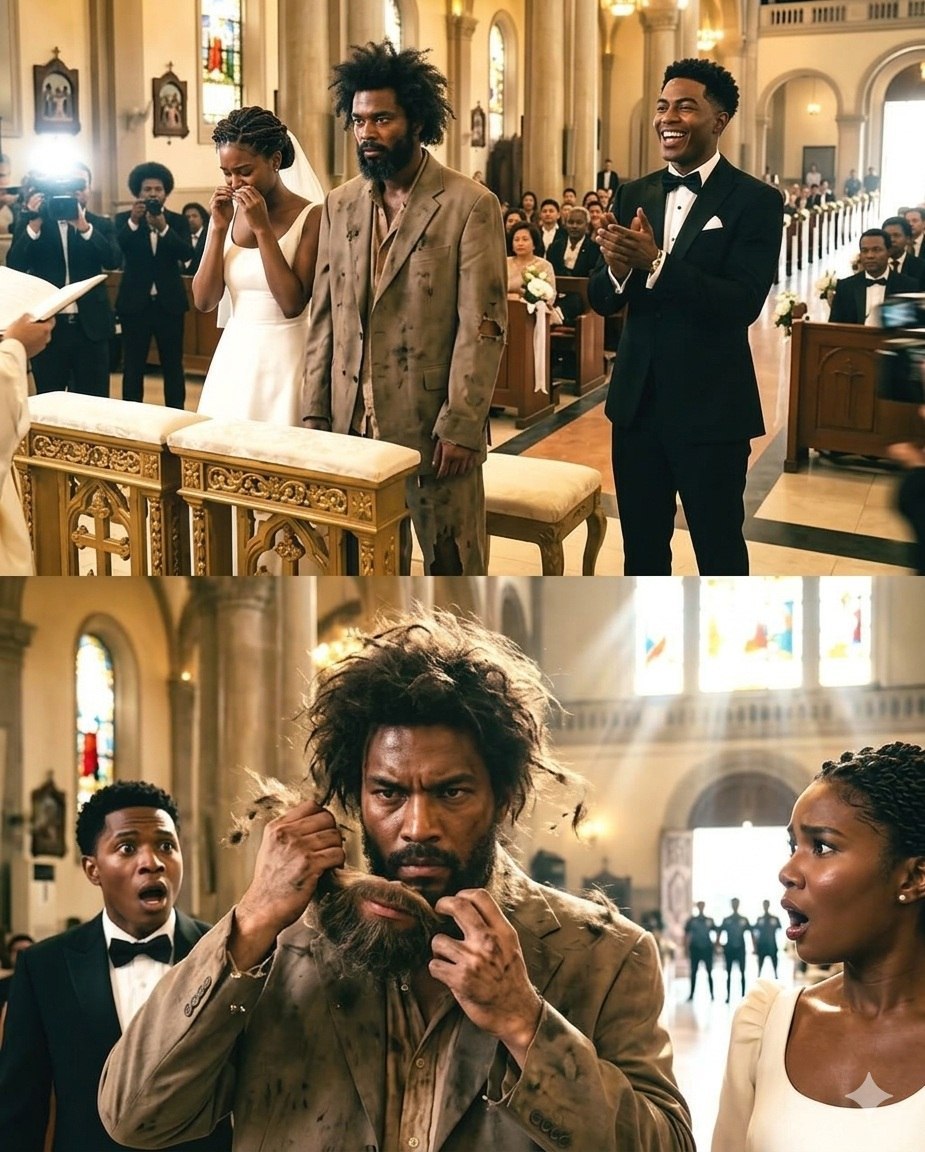
MY RICH EX-BOYFRIEND FORCED ME TO MARRY A STARVING BEGGAR IN FRONT OF THE CAMERA TO HUMBLE ME.

by

MY RICH EX-BOYFRIEND FORCED ME TO MARRY A STARVING BEGGAR IN FRONT OF THE CAMERA TO HUMBLE ME. HE THOUGHT IT WAS HIS GREATEST SUCCESS. BUT WHEN WE WERE AT THE ALTAR, WHAT THE MAN IN THE SHIRT DID WAS CONTINUE TO CRUSH THE BILLIONAIRE’S EMPIRE.

The Cruel Agreement

I’m Clara. It’s been a year since my ex-boyfriend Julian destroyed our family. Julian was an arrogant billionaire and CEO of a large investment firm. Because I broke up with him after I caught him with another woman, he retaliated. He used his money and influence to bring down my father’s small business, causing him to have a heart attack and eventually die.

We are deep in debt, and my mother is now dying in the hospital and needs five million pesos for a heart transplant.

In desperation, I knelt before Julian to beg for help. But instead of showing mercy, he greeted me with a devilish smile.

“I’ll give you five million for your mother, Clara,” Julian offered with a smile as he drank his wine. “But on one condition. You will marry a man I choose for you tomorrow. A beggar I picked up on the street. And we will do it in a big church, with all the media and our billionaire friends invited. I want the whole world to see how pathetic you are and how low a Clara Valderama has stooped!”

For the sake of my mother’s life, I closed my eyes and agreed. I sold my soul and dignity to a monster.

The Marriage of Shame

The wedding day arrived. It was held in a large cathedral filled with socialites, politicians, and reporters Julian had paid to cover “The Wedding of the Beggar and the Princess.” Julian stood at the front, delighted with his masterpiece.

When the doors opened, I walked in wearing a simple white dress, tears streaming down my cheeks. I could hear people laughing and insulting me.

At the end of the altar, stood the man I was going to marry. His name was Lando.

He was wearing a very dirty, torn, and sewer-smelling suit. His hair was long and messy, and his face was covered in a thick beard and soot. He was trembling and hunched over, like a dog accustomed to being beaten on the road.

“My God, that’s disgusting! The groom smells like a trash can!” Julian’s new bride shouted, and the entire church burst into laughter.

When I reached the altar, I looked at Lando. I expected to see someone naive, but I was surprised when our eyes met. Underneath the soot and tousled hair, his eyes were fearless. They were sharp, calm, and burning with a quiet power.

The Explosion of the Altar

The ceremony began. As the priest read the words, Julian laughed nonstop in the background.

“Before I pronounce you husband and wife,” said the priest, “is there anyone who objects to this marriage?”

“I object.”

A deep, cold, and resonant voice broke through the deafening laughter inside the cathedral. It didn’t come from the guests. It came from the beggar standing in front of me. From Lando.

Julian frowned. He quickly stood up from his chair. “Hey, you famished! What are you doing?! I paid you ten thousand to follow the script! Go ahead with the wedding!”

But Lando didn’t budge. He slowly raised his hands. In front of hundreds of guests and media, he took off his messy and dirty wig. He removed the fake beard that was stuck to his face. He took a wet handkerchief from his pocket and wiped the soot from his cheeks and forehead.

Everyone gasped. Even I recoiled in shock.

The filthy beggar disappeared. What emerged from under the rags was a very handsome, elegant, and feared face throughout the world of business and investment.

“W-What…?!” Julian’s jaw dropped. He turned pale as if he had seen death. His legs began to tremble until he was clutching the chair.

“My name is not Lando, Julian,” the man said coldly, now looking like an angry king standing at the altar. “I am Gabriel Imperial. The CEO and Founder of Imperial Conglomerate —the very company you are now begging to give you a fifty billion peso investment to save your failing business.”

The Truth That Broke the Billionaire

Reporters shouted and cameras flashed. The billionaire guests were in a frenzy, unable to believe that the man they had been laughing at was the richest man in the entire country.

“M-Mr. Imperial?!” Julian stammered, shivering, cold sweat dripping down his face. “W-How… why did you pretend to be a beggar on the street?!”

“Because I know about your dirty game, Julian,” Gabriel thundered back, shaking the cathedral. He pulled a black flash drive from his tattered suit and held it up for all to see. “I received an anonymous tip about your illegal activities in the stock market. I posed as a beggar outside your office and mansion for three months to collect all the evidence of your theft and money laundering.”

“That’s a lie! That’s AI!” Julian shouted in panic, about to run out of the church.

“Lock the doors!” Gabriel ordered.

From the church doors, dozens of National Bureau of Investigation (NBI) agents in uniform and armed with guns entered. They blocked all exits.

“This flash drive contains all the evidence!” Gabriel boldly announced. “It includes evidence of how you sabotaged Clara’s father’s company, which led to her death, and how you stole your investors’ money!”

Julian collapsed on the church floor. The man he thought he would use to humiliate me was the very man who had ruined all his evil. He was crying and begging as the NBI agents mercilessly handcuffed him.

« Mr. Imperial! It’s like you’re taking pity on me! I’ll take you as my partner! Clara! Please ask him, we were together before! » Julian cried out as he was dragged out of the cathedral in front of the screaming guests and flashing cameras.

I felt no pity. I just watched him disappear from my sight. The man who destroyed my family was completely destroyed.

The True Oath

When the cathedral fell silent, Gabriel faced me. Even though he was still wearing a faded and old suit, to me, he was the most handsome and gentlemanly man in the world.

He took my trembling hands.

“Clara,” he whispered softly, his eyes full of respect and sincerity. “I have been watching you for a long time while I was on the road. I have seen your hard work, kindness, and sacrifice for your family. My mission to save the business from greedy people like Julian is complete. I have also had my staff explain the entire operation on your mother at the best hospital this morning.”

My tears fell, not from pain, but from immense happiness and gratitude. “T-Thank you… Mr. Imperial.”

“Gabriel, come on,” she smiled. She slowly knelt on one leg in front of the altar. “I don’t know if you still believe in love after what happened… but can I continue this marriage, not as a punishment, but as the beginning of a lifetime of protection and love?”

My tears flowed and I smiled so sweetly. Amidst the applause and screams of the guests who had earlier been laughing at us, he kissed my hand. That was not the day of my shame. That was the beginning of a love that began with the darkest disguise and ended with a very bright truth.

Farewell to a legend: Bruce Willis

by

Farewell to a legend: Bruce Willis

Bruce Willis

He was diagnosed with frontotemporal dementia (a condition often beginning with primary progressive aphasia) in 2023, which led to his retirement from acting,

The sentiment you expressed, however, is a beautiful tribute to his legacy and the impact he has had. Here is a revised version that honors his current journey:

Honoring a Legend: Bruce Willis

Bruce Willis is not only a celebrated actor but also a person cherished for his down-to-earth nature, his humor, and his dedication to family. Though he has stepped away from the screen due to health challenges, his legendary legacy remains vibrant and unforgettable.

Our thoughts are with him and his family. The joy from your films, your iconic smile, and your strength continue to inspire and live on in our hearts.

Knox Jolie-Pitt Sparks Buzz Among Fans of Brad and Angelina

by

Hollywood has long been fascinated by the children of its biggest stars, and few attract as much attention as the Jolie-Pitt twins. Recently, photos of 15-year-old Knox Jolie-Pitt out with his mother, Angelina Jolie, sparked widespread discussion online.

Fans quickly noticed Knox’s striking resemblance to his father, Brad Pitt. His tall frame, sharp cheekbones, and familiar smirk led many to say he looks like a near replica of Pitt as a teenager.

Knox is the fraternal twin of Vivienne and the youngest biological child of Pitt, 60, and Jolie, 49. Despite their high-profile divorce eight years ago, the children have largely been raised with a balance of privacy and public life.

Social media users debated which parent Knox resembles more. While many pointed to Pitt’s jawline and expressions, others noted Angelina’s elegance and facial structure in his features.

Born in 2008, Knox joined a large blended family that includes adopted siblings Maddox, Zahara, and Pax, as well as sister Shiloh. The Jolie-Pitt family has long been known for combining Hollywood fame with philanthropy.

Even at a young age, Knox’s resemblance to his father was evident. In 2011, Jolie remarked that Knox was emotionally and physically similar to Pitt, a comment fans say still rings true today.

Knox has made occasional public appearances over the years, including a 2019 charity event selling homemade dog treats for an animal rescue. More recently, he was seen with Jolie running errands, now noticeably taller than his mother.

Beyond looks, Knox has shown early creative interests, including a small voice role in Kung Fu Panda 3. As he grows older, fans remain intrigued by how he blends his parents’ legacy with his own emerging identity.

Top Ad 728x90

Top Ad 728x90