Top Ad 728x90

Monday, 22 June 2026

📰 Breaking news about the missing 29-year-old Dimitar..see more

by


The missing 29-year-old Mitko (Dimitar Enev Dimitrov) from Devnya has been found. He suffers from paranoid schizophrenia and had been missing for several days.

He was found this morning by his brother in a neighboring house.

For days, a volunteer formation from the Municipality of Devnya had been searching for him. Yesterday, members of the group—most of whom are hunters familiar with the area—searched the forest, shelters, and all possible places where he might have taken refuge.

Abandoned buildings were checked, and surveillance camera footage across the municipality was reviewed, but without success.

According to some people who saw him the day before he disappeared, he was heading toward Varna, but this information was never confirmed.

Do you see the man running towards you or away from you?

by


While for some, self-awareness comes naturally, making them highly mindful of their actions and words, others must consciously work to develop it. This trait also helps us recognize and avoid harmful situations or relationships.

An interesting and fun way to gauge your self-awareness is through optical illusions. These illusions challenge your perception and reveal insights about your personality and thought patterns. Below are eight optical illusions that can give you a glimpse of how self-aware you are:

1. Male or Female Brain? This Illusion Holds the Answer

Image Credit: Awareness Act

Advertisement

Life’s masculine and feminine energies—often referred to as Yin and Yang—represent two complementary forces that maintain balance in the universe. These energies, associated with certain traits, are independent of biological sex or gender. This illusion asks you to decide:

Do you see a man running away or running toward you? Your answer can provide insights into the way your brain works:

Running Away:

This suggests you approach decisions carefully and rely on reasoning and logic to overcome challenges. You’re skilled at multitasking and have a sharp memory. Intuition is your greatest strength, and your thought process aligns more with the “female brain.”

This morning we lost a beloved singer, someone we deeply admired… See more

by


 This morning brought heartbreaking news as the world learned of the passing of a beloved singer, someone whose voice touched countless lives.

Fans everywhere are mourning the loss of a talent who brought joy, inspiration, and unforgettable melodies through the years.

The announcement has sent waves of grief across social media, where admirers are sharing their favorite memories and songs in tribute….CONTINUE READING BELOW

The singer’s career spanned decades, marked by powerful performances, timeless hits, and a unique ability to connect deeply with audiences.

For many, their music was not just entertainment, but a source of comfort during difficult times and a soundtrack to life’s most meaningful moments.

Their artistry carved a permanent space in the hearts of listeners around the globe.

Close friends, family members, and colleagues have begun to share emotional messages, expressing how much the singer meant to them both personally and professionally. Many recall their kindness offstage, their dedication to fans, and the passion they poured into every performance.

These heartfelt tributes reflect not only the impact of their music but also the warmth of their character.

Though the loss is immeasurable, the singer’s legacy will live on through the songs that continue to resonate across generations. Even in their absence, their voice remains a beacon of comfort and inspiration.

As fans grieve this tremendous loss, they also celebrate the life and contributions of a true icon who will never be forgotten.

She-deserved another chance? What she did was Terrible.. Check out in the comment... 💬 ⤵

by


 The state of Tennessee stands on the precipice of a historic and polarizing moment in its judicial history as the execution date for Christa Pike, scheduled for September 30, 2026, approaches. If the sentence is carried out, Pike will become the first woman executed in the state in over two centuries, a fact that has drawn international attention to a case that has haunted the American South since the mid-1990s. The proceedings have reignited a fierce national debate regarding the nature of justice, the possibility of rehabilitation for those who commit atrocities in their youth, and the ethical complexities of the death penalty. At the heart of this storm is a crime of such visceral brutality that it remains etched in the public consciousness as a benchmark for teenage depontivity.

The prosecution’s case rests upon the harrowing details of the 1995 murder of Colleen Slemmer, a nineteen-year-old fellow student at a Job Corps center in Knoxville. According to court records and investigative testimony, the crime was not a sudden burst of passion but a calculated orchestration of terror. Pike, then only eighteen, lured Slemmer into a remote wooded area under the guise of a peace offering following a romantic rivalry. What followed was a prolonged period of torture that lasted nearly an hour. Prosecutors emphasized the chilling specifics: the physical assault, the carving of a pentagram into the victim’s chest, and the final, unthinkable act of keeping a shard of Slemmer’s skull as a macabre trophy. The image of Pike recounting the murder with what investigators described as a “gleeful” demeanor solidified her status in the public eye as a remorseless predator.

For nearly thirty years, the state has maintained that the sheer cruelty of the act warrants the ultimate price. Prosecutors argue that the preservation of a skull fragment as a memento demonstrates a level of malice that transcends typical criminal behavior. To the family of Colleen Slemmer, the impending execution represents the final chapter of a three-decade odyssey of grief. They, along with many supporters of the verdict, contend that justice in its truest sense requires a life for a life, particularly when the crime involved such deliberate and sustained suffering.

However, the legal team representing Christa Pike offers a starkly different portrait, one that seeks to contextualize the “remorseless teen killer” within a framework of systemic failure and biological vulnerability. The defense maintains that Pike’s story is inseparable from a childhood defined by extreme neglect and physical abuse—a environment that they argue effectively rewired her adolescent brain. Medical experts testifying on her behalf have diagnosed her with bipolar disorder and post-traumatic stress disorder (PTSD), suggesting that at the time of the murder, Pike was experiencing a perfect storm of mental instability and environmental trauma. Her attorneys argue that executing her would be a failure to account for the profound psychological damage that led to the 1995 tragedy.

Over the course of her twenty-nine years on death row, her advocates claim that Pike has undergone a significant transformation. They point to her decades of clean disciplinary records and her expressions of deep-seated remorse as evidence that the eighteen-year-old girl who committed the crime no longer exists. This argument touches upon a growing legal and neuroscientific consensus that the adolescent brain—highly impulsive and susceptible to peer influence—is fundamentally different from the adult brain. The defense posits that Pike has gained a level of insight and empathy that was biologically impossible for her to possess as a teenager, making her execution an act of vengeance against a ghost rather than a just punishment for a living woman.

The case of Christa Pike sits at a critical intersection of modern jurisprudence. It forces the public and the courts to confront the “evolution of decency” standards that the Supreme Court has often cited in death penalty cases. As Tennessee prepares for this rare and historic execution, the state must weigh the demands of retributive justice against the possibility of mercy. There is a profound tension between the need to affirm the value of the victim’s life and the ethical concerns surrounding the execution of those who were little more than children when they crossed the threshold into violence.

The societal implications are equally heavy. The execution of a woman is a rare event in the United States, and the execution of someone for a crime committed in their teens is even rarer. This case challenges the traditional boundaries of the death penalty, asking whether a society that prides itself on progress and rehabilitation can still justify the irreversible finality of the execution chamber. For some, the execution is a necessary affirmation of the rule of law; for others, it is a barbaric relic that ignores the complexities of human trauma and the capacity for change.

As the clock ticks toward late September, the legal maneuvers continue. There are petitions for clemency, last-minute appeals based on brain imaging technology, and pleas from human rights organizations. Yet, the memory of Colleen Slemmer remains a powerful force in the courtroom. The “horrific crime” revealed in 1995 serves as a permanent anchor for the prosecution, a reminder of a life stolen in the most painful way imaginable. The carved pentagram and the trophy skull are details that refuse to fade, acting as a counterweight to any narrative of personal growth or psychiatric mitigation.

Ultimately, the state of Tennessee is moving toward a moment that will be studied by legal scholars and ethicists for generations. The looming execution of Christa Pike forces a painful, societal self-reflection. Is justice served by the mechanical application of a thirty-year-old sentence, or is it served by recognizing the person she has become in the intervening decades? Between these two poles lies a landscape of grief, trauma, and a quest for accountability that seems to have no easy resolution.

As the September 30th date nears, the eyes of the nation are on Tennessee. The outcome will not only determine the fate of one woman but will also serve as a definitive statement on the state’s views regarding the ultimate punishment. Whether this historic moment is seen as the long-overdue fulfillment of a legal promise or as a tragic repetition of violence depends entirely on which story one chooses to believe: the story of the unrepentant girl in the woods, or the story of the woman seeking redemption behind bars.

I Can’t Hide It Anymore…’Simon Cowell’s tearful confession about son Eric has left fans divided. Some call it his bravest moment yet, others say it raises even more questions… 👀 What did he finally admit after years of silence? Full shocking story here 👇👇👇

by


 Simon Cowell has to be one of the most famous names in the  music industry. Thanks to his talent and sense for business, he made millions over the years.


Had it not been for this man and his reality shows involving discovering music talents, we would have probably never heard of One Direction or Kelly Clarkson.

Simon Cowell interviews

Simon started his career as a music producer, consultant, and scout during the 80’s, but came to public prominence in 2001 as a judge on Pop Idol. The show was a huge success, so Simon went a step further and created The X Factor and Got Talent franchises which are extremely popular in a huge number of countries throughout the world.

He was named one of the 100 most influential people in the entire world two times, in 2004 and 2010.

Music & Audio

Over the few couple of years, the business mogul went through so much. He suffered two accidents. First, he fell off the stairs and then he injured his back severely following an electric scooter accident.

Following the scare which left him injured and forced him to undergo back surgery, the musician and producer tried to warn others of the dangers of electric bikes. “The one I had was basically a motorcycle with an electric engine when you have to wear a proper crash helmet, leathers. This thing was nuts,” he said. “I didn’t know how powerful it was before I got on it. And I fly 6-8 feet in the air and landed on my spine.”

TV Shows & Programs

When it comes to his personal life, what we know of this incredible man of many talents is that he is a great supporter of different charities and is a huge animal lover. Since 2013, Simon has been together with long-time girlfriend and the mother to his son, Lauren Silverman. When the world learned the two were dating, the news caused a stir because they allegedly started an affair while Lauren was still married to former husband Andrew Silverman who happened to be one of Simon’s closest friends.

Simon Cowell interviews

In 2014, the couple welcomed son Eric. “Meeting Lauren and becoming a dad was the most fantastic thing to happen in my life,” Cowell told Hello Magazine.

“It’s hard when you have kids at my age but it’s amazing. When you work as hard as I do, you think, ‘What’s it all going to be for at the end?’ Then somebody like him comes along and it’s all worthwhile.”

Thanks to his shows and his sense for business, Simon has made $600 million, as per  Celebrity Net Worth. However, it looks like Eric won’t inherit his father’s fortune. Why, you may wonder. Well, that’s because Simon believes his son should create fortune on his own.

TV Talent & Variety Shows

“I’m going to leave my money to somebody. A charity, probably — kids and dogs. I don’t believe in passing on from one generation to another,” Simon told The Mirror and added, “Your legacy has to be that hopefully you gave enough people an opportunity, so that they could do well, and you gave them your time, taught them what you know.”

Simon and Eric have a lot in common and they enjoy spending plenty of time together. According to the proud father, they both love Scooby Doo and enjoy watching Disney  movies together.

”He’ s the most amazing thing that ever happened to me. I adore him,” America’s Got Talent judge said.

The X Factor music

Eric was named after Simon’s father, Eric Selig Phillip Cowell, who passed away in 1999.

Simon Cowell created an empire.

SAD ENDING BELOVED comedian and actor found dead this morning at his home. The cause of his death is very sad Watch...see more

by


It was just past midnight on a quiet Tuesday morning when news quietly rippled through the entertainment world: George Wendt, the man forever known to millions as “Norm” from Cheers, had died in his sleep. No headlines screamed. No major alerts flashed. Just a simple confirmation from his family that he had passed away peacefully at home.

But for longtime fans and those who knew him, the silence was almost too quiet. What happened to Norm? How could someone so full of warmth, wit, and presence—both on screen and off—simply disappear into the night?

A Familiar Face, Now Gone Without Warning

George Wendt, 'Cheers' Star Who Played Norm Peterson, Dead at 76


To understand the gravity of the moment, you must understand who George Wendt was—not just as a performer, but as a cultural anchor. For over a decade, his entrance into the Cheers bar was a moment of joy, ritual, and comfort for audiences everywhere. That simple call of “Norm!” became one of the most beloved cues in sitcom history.
But Wendt was never one to chase celebrity. He was the kind of actor who seemed too grounded for Hollywood drama. So when his passing was announced with little detail, fans couldn’t help but wonder: Was it really that simple? Or was there more to the story?

The Official Word—and What Wasn’t Said

A Peaceful Departure

According to a representative for the family, Wendt died peacefully in his sleep at home. There were no further elaborations. No mention of prior illness. No public health struggles. No drawn-out hospital stays.

Cheers star George Wendt, 76, looks frail in wheelchair during rare outing | Metro News
His family, in their statement, described him as “a doting family man, a well-loved friend, and confidant to all of those lucky enough to have known him.” But even in their tribute, the cause of death was left unspoken. It was a gentle goodbye—but one that left a trail of questions behind.

A Sudden Silence

For someone who had recently reunited with the Cheers cast at the 75th Primetime Emmy Awards just months before, Wendt appeared in good spirits. He smiled, laughed, and shared knowing glances with Ted Danson and Kelsey Grammer as they stood together one last time on stage.
There were no public signs of failing health. No canceled appearances. No official retirement announcement. It was as if he had simply slipped behind the curtain and never returned.

Behind the Laughs: The Man Few Truly Knew

A Life Away from the Spotlight

George Wendt died on eerie anniversary of Cheers finale - Celebrity News - Entertainment - Daily Express US

George Wendt was never tabloid fodder. Married to actress Bernadette Birkett since 1978, with whom he shared three children, he spent most of his post-Cheers years living quietly between Chicago and Los Angeles. He preferred theater to fame, modest dinners to exclusive galas, and close friendships to industry politics.
Colleagues described him as “the kind of guy who remembered your kids’ names, even if you only worked with him once.” His warmth was not an act—it was who he was.

The Last Curtain Call?

In 2024, Wendt seemed poised for a quiet resurgence. He had returned to stage work in small productions. There were rumors—though never confirmed—of him reprising a supporting role in an upcoming streaming project. And then, everything stopped.
No press tour. No fanfare. No final interview. Just silence.

A Pattern of Graceful Exits

Avoiding the Spotlight

George Wendt, who played a beloved barfly on 'Cheers' and found another home onstage, dies at 76 - The Press Democrat

Some actors orchestrate grand farewells. George Wendt was never one of them. His entire career was built on presence, not performance. When The George Wendt Show aired briefly in 1995, he didn’t complain about its early end. When he took over Broadway roles like Edna Turnblad in Hairspray, he didn’t seek critical acclaim—he just did the work.
So perhaps it’s fitting, in a way, that his passing followed the same path: quiet, humble, and without spectacle.

The Weight of Private Battles

While no official cause of death has been released, some fans have begun piecing together clues.

  • Was he ill in secret? Possibly.

  • Was he exhausted by decades of life in entertainment? Maybe.

  • Or had he simply reached a point of peace—and chose to go without disrupting the story?
    Only his closest family members may ever truly know. And perhaps, that’s how he wanted it.

A Legacy That Speaks Louder Than Headlines

The Norm Effect

George Wendt Dead: 'Cheers' Star Was 76

Wendt’s character, Norm Peterson, is more than just a sitcom sidekick. He’s a cultural icon. The guy at the bar who always had a one-liner, always knew your name, and always stayed loyal.
But beyond the character, Wendt gave the world something more valuable: consistency in an industry that often rewards chaos. In his decades of work, you won’t find scandal, ego battles, or courtroom drama. You’ll find craft. You’ll find love for the work. And you’ll find humanity.

Tributes with Quiet Reverence

As tributes began pouring in—from co-stars like Ted Danson, John Ratzenberger, and Rhea Perlman—one theme echoed again and again:

The Questions That Remain

Why Now, and Why So Quietly?

Fans are still waiting for official clarification, but Wendt’s family has remained respectful and private. And perhaps that’s the final lesson George leaves us:
Not everything needs to be explained. Some stories don’t have dramatic endings. Some simply… end.
And in that quiet goodbye, he may have taught us more about grace, humility, and letting go than any headline ever could.

What We Can Learn

The world didn’t lose a celebrity. It lost a man who made millions of people feel like they belonged—whether they were walking into a bar, sitting on a couch, or dealing with the rough parts of life.
And now, we walk into a world without Norm.

Final Thoughts: A Toast to the Man Who Made Us Laugh Without Trying

George Wendt didn’t just play Norm. He was Norm. He was all of us. The friend we counted on, the face we welcomed after long days, the voice that reminded us that humor doesn’t have to be loud—it just has to be honest.
His passing may remain mysterious. But his impact? That’s as clear as ever.
So tonight, wherever you are, raise a glass. To George. To Norm. To the quiet ones who made the biggest difference.

Sources:

  • CBS News – Official Family Statement

  • The Guardian – Cheers Cast Remember George Wendt

  • Playbill – George Wendt’s Stage Career

  • Variety – Emmy Awards Cheers Reunion Coverage

  • Second City – Alumni Tribute

Police find girl missing since 2022: ‘She was n… See more....👇👇

by


 More than five decades have passed since three-year-old Cheryl Grimmer vanished from Fairy Meadow Beach in New South Wales, Australia, on 12 January 1970. What should have been a carefree day at the seaside turned into one of the nation’s most enduring mysteries. Despite multiple reviews, international attention, and even a million-dollar reward, the case remains unsolved.

Recently, Cheryl’s family expressed renewed anger after learning that police did not formally interview three potential eyewitnesses who came forward following a BBC podcast. For the family, it felt like another painful setback in their search for answers.

The Day Cheryl Disappeared
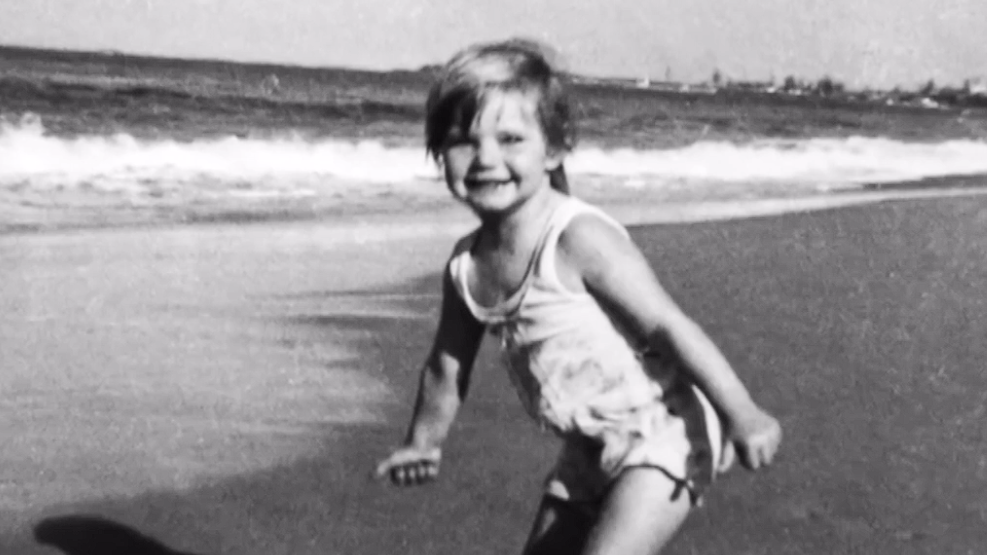
A black and white photograph showing three-year-old Cheryl Grimmer standing on a beach with waves gently lapping in the background. She has short fair hair and is wearing a white bathing costume.

Cheryl Grimmer had emigrated from Bristol, UK, with her parents and three brothers only a year before her disappearance. On that summer day in 1970, the family went to Fairy Meadow Beach, about 50 miles (80 km) south of Sydney.

Cheryl and her seven-year-old brother Ricki were in the changing rooms near the beach. Ricki remembers looking away for just a few moments before realizing his younger sister was gone. Despite immediate searches by family and beachgoers, no trace of Cheryl was found. Authorities quickly suspected an abduction, but no arrests at the time led to a conviction.

A Painstaking Review Yields No Breakthrough
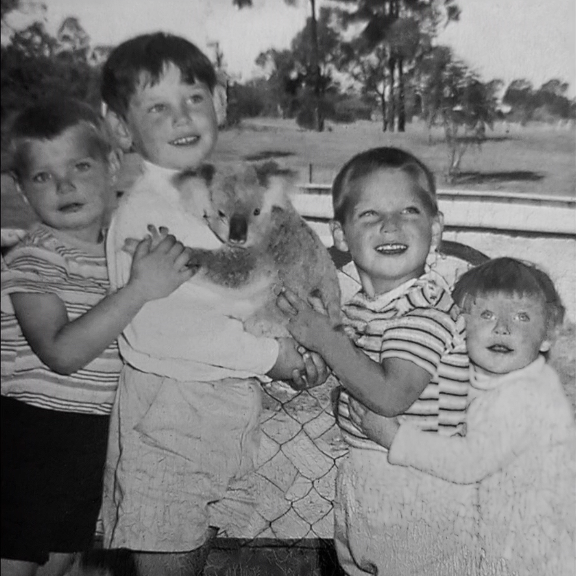
A black and white photo showing Cheryl Grimmer and her three brothers holding a koala.

In recent years, New South Wales Police conducted a four-year review of the case. Cheryl’s family had hoped it would reveal new leads, especially after renewed public interest sparked by the Fairy Meadow true-crime podcast, which has been downloaded more than five million times.

Instead, police informed the family that the review uncovered no new evidence capable of securing a conviction. To the family, this felt like yet another chapter of disappointment in a case already burdened by decades of unanswered questions.

Eyewitnesses Left Without Interviews
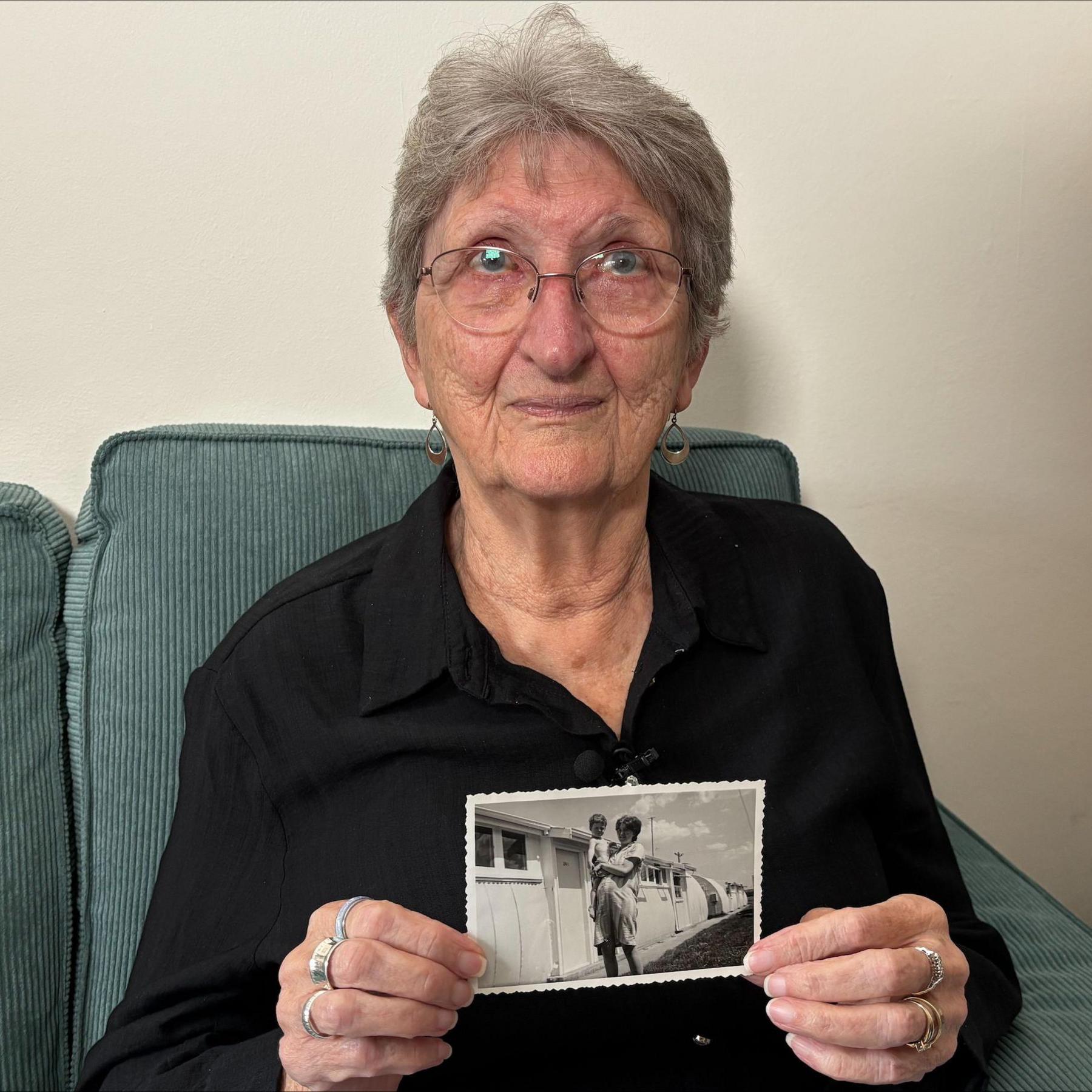
Kay Tutton looks at the camera as she holds up a black and white picture of herself as a child. She is wearing glasses, a black blouse and is sitting on a grey sofa.

What particularly angered the Grimmer family was the revelation that three potential eyewitnesses who contacted the BBC after the podcast were not formally interviewed by police.

  • The first witness, who requested anonymity, told the BBC he had seen a teenage boy carrying a small child away from the beach changing rooms on the very day Cheryl disappeared. He spoke briefly to police by phone but never heard back.

  • Kay Tutton, now 82, recalled seeing a distressed young girl being led away by a man at Fairy Meadow. She initially went to the police in 1970 after watching a news report, but never received follow-up contact. After reaching out again in 2022, she too said she was not interviewed.

  • The third woman, who also asked to remain unnamed, said she had been approached by a man on a nearby beach days before Cheryl vanished. She expressed disappointment that her account had not been pursued further.

Cheryl’s brother Ricki described his reaction as “total frustration,” saying the lack of interviews undermined confidence in the thoroughness of the review. “Our family can’t move forward without the help of the police,” he told the BBC.

Former Detective Voices Concern

Retired detective sergeant Damian Loone, who once worked on the case, criticized the handling of these witness accounts. He described one man’s testimony as “very credible” and said he could not understand why it was not pursued.

Loone argued that the man appeared to be the only independent eyewitness linking a teenage boy—estimated to be 16 or 17 years old—to Cheryl on the day she vanished. That detail is significant because the suspect once charged in the case, known only by the codename “Mercury,” was in that same age group at the time.

“I think that’s sloppy police work,” Loone said. “That’s what they should have done and I can’t believe that it hasn’t happened.”

The 2016 Breakthrough That Collapsed

In 2016, decades after Cheryl’s disappearance, a man in his 60s was charged with her abduction and murder. Police had uncovered a confession he made as a teenager in 1971. However, a judge later ruled the confession inadmissible, and the man—known only as “Mercury” because he was a minor at the time—was released. All charges were dropped in 2019.

The collapse of the case was devastating for Cheryl’s family. They had briefly hoped justice was within reach, only to watch the case unravel in court.

Petition and Calls for Accountability

Public interest in Cheryl’s case has remained strong. A petition earlier this year calling for a parliamentary inquiry into how New South Wales Police handle missing persons investigations gathered more than 10,000 signatures.

Although the issue was debated in parliament, the state’s minister for police and counter-terrorism made no commitment to launching such an inquiry. For Cheryl’s family, this felt like yet another missed opportunity for systemic change.

Police Defend Their Approach

In a statement, NSW Police insisted that all information received—including witness details shared by the BBC—was assessed in line with investigative standards. They emphasized that not every individual who contacts police is guaranteed a formal interview. Instead, each account is evaluated for relevance to the established facts of the case.

Police also noted that they had met with members of Cheryl’s family in September 2023 for a three-hour discussion, during which they outlined all known and verified information.

Still, this explanation has not satisfied the Grimmers, who believe potentially valuable testimony has been overlooked.

A Family’s Enduring Pain

For Ricki, now 62, the pain of losing his sister remains raw. He vividly recalls being in the changing rooms with Cheryl moments before she disappeared. Over the years, he has written open letters criticizing what he views as repeated errors in the investigation.

“You offer a million-dollar reward, people come forward, you don’t speak to them. Why offer the reward?” Ricki asked. “Was that just to appease our family, appease the public, make it look like you’re doing something? In actual fact, you’re doing nothing.”

The reward he referred to was announced in 2020—AU$1 million (about £529,000)—for information leading to a conviction. Yet without interviews of the new witnesses, the family feels that promise rings hollow.

Why Cheryl’s Case Resonates

Cheryl’s disappearance is one of Australia’s most haunting unsolved cases, not only because of the young age of the victim but also because of the decades of uncertainty that followed. The case highlights broader issues in missing persons investigations:

  • The importance of acting quickly on eyewitness testimony. Delays or dismissals can permanently close off potential leads.

  • The role of media in reopening cold cases. The BBC podcast prompted witnesses to come forward decades later.

  • The emotional burden on families. For the Grimmers, every setback compounds the grief of a tragedy that never had closure.

Moving Forward: What Needs to Change?

Experts and advocates suggest several steps could help ensure Cheryl’s story leads to meaningful reform:

  1. Independent oversight of cold cases. Families often feel police reviews lack transparency. An independent body could provide accountability.

  2. Structured protocols for eyewitness testimony. All credible accounts, regardless of the time elapsed, should be formally recorded and assessed.

  3. Continued use of public engagement tools. Podcasts, documentaries, and reward programs can play an important role, but they must be paired with robust follow-up by law enforcement.

A Symbol of Persistence

Although Cheryl Grimmer’s fate remains unknown, her case continues to symbolize persistence in the face of heartbreak. Her family’s determination to demand accountability, coupled with public interest sparked by modern media, ensures the little girl lost on Fairy Meadow Beach in 1970 is not forgotten.

The unanswered questions weigh heavily: What really happened that day? Could eyewitness testimony still unlock the truth? And will the system ever deliver the justice Cheryl’s family has waited more than 50 years to see?

For now, the family vows to keep fighting. “There are no words, just nothing,” Ricki said. “Our family can’t move forward without the help of the police.”

Sunday, 21 June 2026

20 minutes ago in Los Angeles, it was confirmed that Michelle Obama was…see more 👇

by


 Malia Obama, the eldest daughter of Barack Obama and Michelle Obama, is building a creative career in film under a new professional identity. Choosing to work as “Malia Ann,” she has decided to use her middle name as she develops projects in the entertainment industry. The decision reflects a desire to establish herself independently while continuing to honor her family backgro…

Rather than distancing herself from her history, the change represents a personal and professional choice.

In an industry where well-known surnames can shape expectations, she aims to ensure that her work is evaluated on its own merits. By presenting herself under a different name, she encourages audiences and collaborators to focus on her skills, dedication, and storytelling ability.

She has already gained experience in writers’ rooms and creative development, contributing to projects that explore modern themes and complex characters. Notably, she worked as a writer on the television series Swarm, created by Donald Glover. Her involvement in such productions has helped her build industry knowledge and refine her artistic voice.

The world is trembling!! Donald Trump confirms that the.…See more

by


 The moment the cameras caught it, everything shifted from routine to confrontation.

What began as a typical political segment quickly turned into a heated exchange between Donald Trump and Barack Obama.

Trump moved away from policy discussion and into sharp personal criticism, changing the tone instantly.

The moment spread rapidly online, drawing strong reactions and dividing audiences almost immediately.

Clips circulated across platforms, with different groups interpreting the exchange in completely different ways.

The incident highlighted how quickly political moments can become amplified and reshaped in the digital space.

It also reflected a broader shift, where emotional impact often outweighs careful analysis or shared understanding.

In the end, the exchange underscored how modern politics is increasingly driven by spectacle as much as substance.

Saturday, 20 June 2026

BREAKING NEWS: Trump spotted with a...see more

by


A late-night report involving Donald Trump drew attention online after social media users began circulating claims that he had been seen walking shortly after midnight while carrying a small item in his hand.

The details remain limited. According to the accounts being shared, Trump was allegedly wearing a baseball cap and appeared to be without the usual visible signs of a public appearance, such as cameras, an announced schedule, or a noticeable security presence. The part that received the most attention was a small object some observers claimed could be seen reflecting light under nearby streetlamps.

Because the sighting has not been independently confirmed in detail, the conversation quickly moved beyond what was actually known. In the absence of clear information, people began offering their own theories about where he was, why he may have been outside, and what the object might have been.

What Is Actually Known
At this point, the publicly discussed information is based largely on accounts circulating online. There has been no clear verified explanation for the object reportedly seen in Trump’s hand, and no confirmed public schedule or official statement tied to the alleged late-night walk.

That lack of confirmation is important. A public figure being seen in an ordinary setting can take on a much larger meaning once images, captions, and assumptions begin spreading across social media. A small detail that might otherwise be overlooked can become the center of a much bigger conversation.

Why the Reaction Grew So Quickly
Stories involving major political figures often move fast because they sit at the intersection of curiosity, politics, and public image. When the information is incomplete, people tend to fill in the blanks based on what they already believe or expect.

That is what made this episode stand out. The discussion was less about a confirmed event and more about the way uncertainty turned into speculation. A quiet walk, a dimly lit object, and a few online claims were enough to create a wave of interpretation.

Some people treated the reported object as meaningful. Others dismissed the entire discussion as an overreaction. Both responses show how quickly a minor detail can become part of a larger narrative when the person involved is already under constant public scrutiny.

The Bigger Picture
The episode is a reminder that not every unclear image or late-night report points to something significant. In the modern media environment, attention often builds before verification catches up.

For readers, the key is separating confirmed facts from speculation. The reported sighting may turn out to be ordinary, inaccurate, or simply unresolved. What is clear is that public reaction can become the main story when hard details are scarce.

Sometimes the most revealing part of a viral moment is not what happened, but how quickly people decide what they think it means.

Top Ad 728x90